EN
ES Fiber vs Bicomponent Fiber: Differences and Applications
In textile materials, ES fiber usually refers to a low-melt bicomponent staple fiber used to help form thermally bonded nonwovens. Search results can confuse the abbreviation with fiber internet, so the distinction matters: this article discusses textile ES fiber, not telecommunications. An ES fiber comparison is therefore not a comparison between two unrelated materials. It is usually a comparison between a familiar sheath/core construction and the wider family of bicomponent materials.
From a fiber-process technical advisory perspective, the useful question is not which label sounds more advanced. It is which structure, polymer pairing, bonding route, and end-use requirement should guide material selection. The intended web weight, hand feel, resilience, thermal process window, and test method all influence the answer.
What is ES fiber?
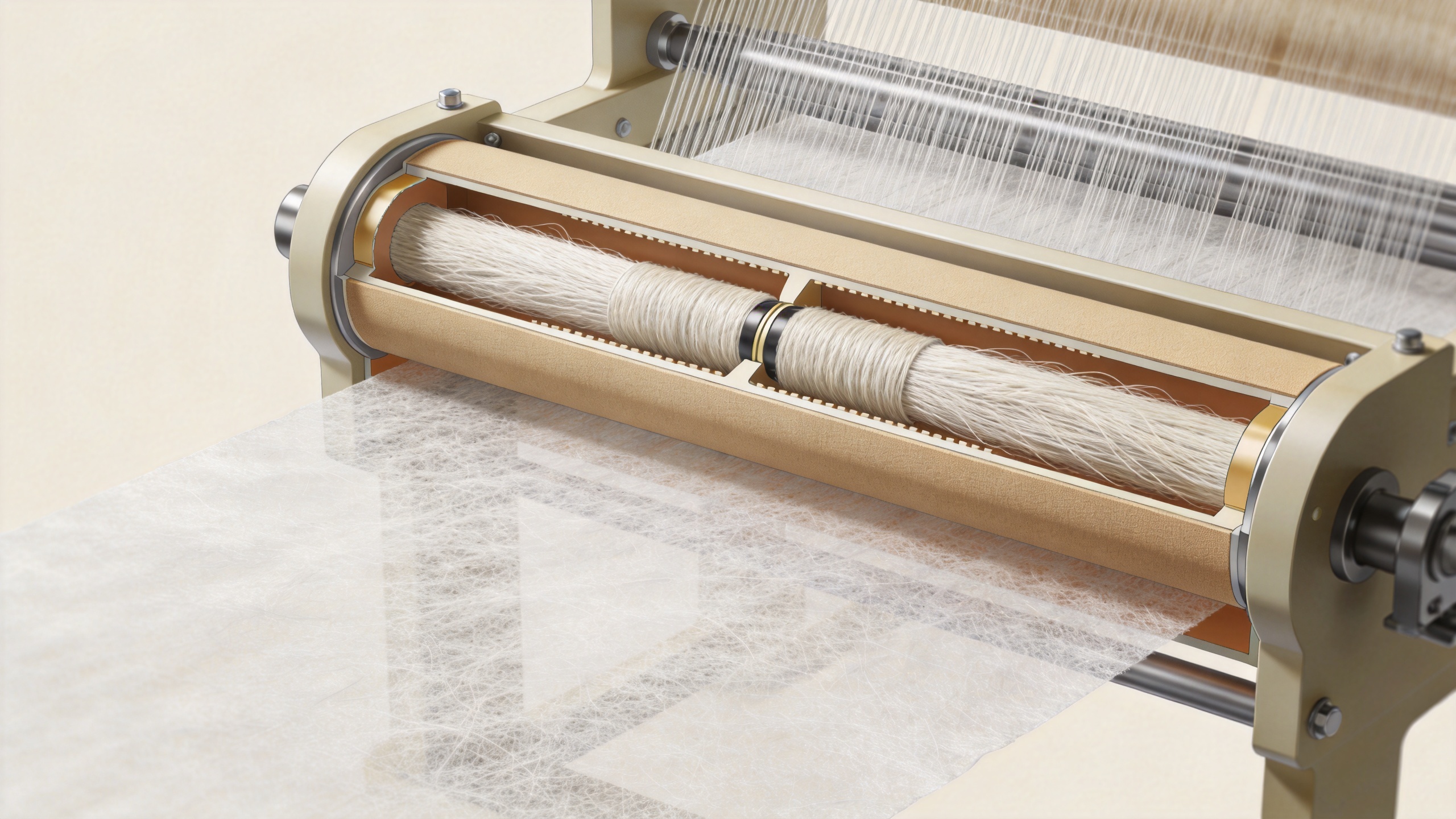
ES fiber is commonly described in the nonwoven industry as a sheath/core bicomponent fiber with a lower-melting outer component and a higher-melting inner component. A frequently discussed pairing uses polyethylene in the sheath and polypropylene or polyester in the core. During suitable thermal bonding, the sheath may soften or melt before the core, creating bonding points where fibers contact while helping the web retain a fibrous structure.
That description is useful, but it is not a universal specification. Polymer grades, cross-section, denier, cut length, finish, sheath-to-core ratio, thermal settings, and downstream converting conditions can differ. Before treating an ES fiber as suitable for a particular product, the material team should confirm the actual construction and evaluate it under the intended process conditions.
What does bicomponent fiber mean?
Bicomponent materials combine two polymer components within one fiber. The components can be arranged in more than one geometry. Sheath/core is one format; side-by-side and eccentric arrangements are other familiar examples. This broader category is designed so that the two components can contribute different behaviors, such as thermal bonding potential, bulk development, crimp tendency, or structural support.
In practical terms, ES fiber is often discussed as one type of bicomponent fiber, while bicomponent fiber is the umbrella term. The terms should not be treated as interchangeable without checking the actual construction. A side-by-side fiber selected for crimp development, for example, raises a different set of questions from a sheath/core fiber selected for through-air bonding.
ES fiber comparison: the practical differences
| Decision point | ES fiber | Broader bicomponent fiber category |
|---|---|---|
| Typical meaning | Often a low-melt sheath/core textile fiber for thermal bonding. | A general fiber family containing multiple polymer combinations and geometries. |
| Common structure | Usually concentric or eccentric sheath/core. | May be sheath/core, side-by-side, segmented, or another engineered arrangement. |
| Primary selection question | Can the available bonding process create the intended web integrity without harming the target properties? | Which component pairing and geometry support the required function, and how will that function be validated? |
| Process focus | Bonding temperature profile, dwell time, pressure, airflow, and web composition. | Those factors plus crimp development, splitting behavior, stiffness, resilience, or other geometry-dependent effects. |
| Application fit | Often considered for thermally bonded nonwoven technology. | Can be evaluated for bonding, bulk, elastic response, filtration-support structures, and other fiber applications. |
Treat the table as a decision framework, not a material approval. One important qualification is this: a fiber category does not determine finished-product performance on its own. Web formation, blend ratio, bonding method, basis weight, finishing, and testing conditions also shape the result.
How structure changes the selection conversation
Sheath/core designs
In a sheath/core design, the outer component can be chosen for its response during a bonding step and the inner component can provide a different structural contribution. Published patent literature describes examples with polyethylene sheaths and polypropylene or polyester cores, including differing core-to-sheath proportions. Those examples show why it is important to request the actual construction instead of assuming that every ES fiber has the same ratio or processing range.
Side-by-side and eccentric designs
When two polymers sit alongside each other rather than one surrounding the other, differential shrinkage or response can be relevant to crimp development. This can be relevant when loft, texture, or mechanical behavior is part of the design objective. It is not automatically a replacement for ES fiber: the required performance, process compatibility, and evaluation plan should determine whether the extra design flexibility is useful.
Where ES fiber and bicomponent fibers are used
Both material groups appear across nonwoven technology, but their role depends on the chosen construction. Thermally bonded webs may be considered for hygiene-related, filtration-related, medical-material, industrial, furniture, automotive, and packaging-adjacent applications. These are application categories, not claims that a given fiber grade is suitable for every specification or regulatory setting.
- Hygiene and personal-care webs: selection discussions commonly center on softness, web integrity, bonding conditions, and confirmation of the relevant product requirements.
- Filtration-support materials: engineers may review fiber geometry, pore structure, strength needs, and compatibility with the rest of the media design.
- Industrial nonwovens: the comparison may focus on durability, processing route, stiffness, bulk, or lamination requirements.
- Composite and specialty webs: teams may investigate whether thermal bonding, crimp, or a staged material response supports the planned construction.
A productive fiber applications discussion starts with the finished web and works backward. Instead of listing a feature, ask what decision or operating question that feature is intended to support.
A selection checklist for material and line teams
- Define the web objective. Record the required function, tactile target, structural need, and test criteria before choosing a fiber label.
- Confirm polymer construction. Ask for the polymer pair, geometry, fineness, cut length, finish, and stated sheath-to-core relationship.
- Map the bonding route. Review whether through-air, calender, oven, or another process is planned, then assess the relevant thermal window with trials.
- Review blend and interaction effects. A fiber may be used alone or with other fibers; the blend can change formation and bonding behavior.
- Plan validation. Use defined samples and documented conditions to evaluate the properties that matter for the target application.
- Separate design intent from verified output. A proposed ES fiber or bicomponent construction is a starting hypothesis until process and product testing support the conclusion.
Choosing between ES fiber and another bicomponent design
Choose the ES fiber route when a low-melt sheath/core approach aligns with the planned thermal-bonding process and the project team can validate the resulting web. Explore other bicomponent materials when the goal includes a geometry-dependent behavior—such as crimp development or a different balance between bonding and structure—that a standard ES construction may not address.
For fiber producers and converters, this is also a process-package question. The fiber target, polymer handling, spinning conditions, drawing and cutting steps, web formation, bonding equipment, and quality checks should be reviewed as connected handoffs. Suzhou Soft Gem describes whole-project planning, process-package, and engineering-design discussions for fiber-material production projects; the appropriate scope and evidence should be confirmed for each project.
Conclusion
ES fiber is typically understood as a practical part of the larger bicomponent-fiber family, especially when thermal bonding is the central function. Bicomponent fiber is the broader design space, covering multiple material pairings and fiber geometries. The most useful choice comes from a documented match between fiber construction, nonwoven technology, processing conditions, and the finished web’s validation criteria. If the construction and process conditions are still open, define those questions before treating either option as the final material answer.


 Hot News