EN
Fiber Pilot Line Technology for Developing New Functional Fibers
A fiber pilot line is a controlled process environment for learning how a proposed fiber behaves before a team commits the concept to commercial production. In this context, “fiber” means a material fiber, not telecom infrastructure. For R&D teams, the line connects material preparation, forming or spinning, drawing, treatment, collection, and sample evaluation into one documented learning loop.
That distinction matters in functional fiber development. A promising additive, polymer grade, cross-section concept, or finish may show potential in a laboratory sample yet behave differently once process conditions interact. A fiber pilot line does not turn an early observation into a production promise. It creates a practical setting to define a question, run controlled trials, compare samples, and decide what still needs validation.
What a Fiber Pilot Line Is Designed to Learn
Research machinery is most useful when it is linked to a decision. Before configuring a fiber pilot line, write the trial objective in operational language: identify a workable processing window, compare candidate materials, observe a forming response, or prepare samples for a defined evaluation method. “Make a better fiber” is too broad to guide a useful experiment.
A pilot line can help teams study relationships among material condition, thermal history, throughput, drawing conditions, winding or collection behavior, and downstream treatment. The exact modules differ by process and intended fiber. The value lies in observing a connected sequence rather than judging one unit in isolation. For example, a change that appears helpful at the spinning point may create a handling, uniformity, or finishing question later in the route.
This is why functional fiber development should begin with a small set of measurable hypotheses. The team should state what it expects to observe, what comparison sample it needs, and what result would justify the next round of work. A fiber pilot line provides the setting; disciplined trial design provides the learning.
Start With the Function, Not the Equipment List
When planning fiber innovation, begin with the intended function and its conditions of use. Is the team exploring handling, surface interaction, insulation behavior, strength-related response, filtration-related structure, or another defined requirement? The answer affects which variables deserve attention and which samples should be retained for review.
From there, convert the objective into a trial brief. A useful brief identifies the material inputs, baseline sample, adjustable process variables, sample labeling method, evaluation approach, and decision owner. It also records assumptions. In practice, an R&D group often learns as much from an unsuitable condition as from a promising one, provided the reason is traceable.
- Input definition: material grade, form, additives, moisture condition, and relevant preparation notes.
- Process definition: equipment configuration, key settings, sequence, and any changes made during the run.
- Output definition: sample ID, observed behavior, test method, and limitations of the observation.
- Decision definition: the next question, not an automatic claim of commercial readiness.
This objective-first approach helps a fiber pilot line stay focused. It also gives technical, quality, and procurement stakeholders a common record for later review.
Build a Trial Matrix That Supports Comparison
A trial matrix helps research machinery produce comparable observations rather than isolated anecdotes. Hold some variables steady, change a defined variable or small combination, and document the reason for each run. The matrix does not have to be complicated. Its purpose is to make comparisons fair enough to guide the next decision.
For a fiber pilot line, records typically need to capture the input lot, preparation condition, configuration, relevant setpoints, observed stability, sample traceability, and evaluation notes. If a run is interrupted or adjusted, record that too. Otherwise, a later comparison may confuse a process change with a material effect.
Documentation is particularly important when teams move from exploratory work to internal review. General design-and-development guidance distinguishes verification from validation and emphasizes retained documented information. Applied here, that means a team can check whether a planned trial was executed as intended while still treating end-use or scale claims as separate validation questions.
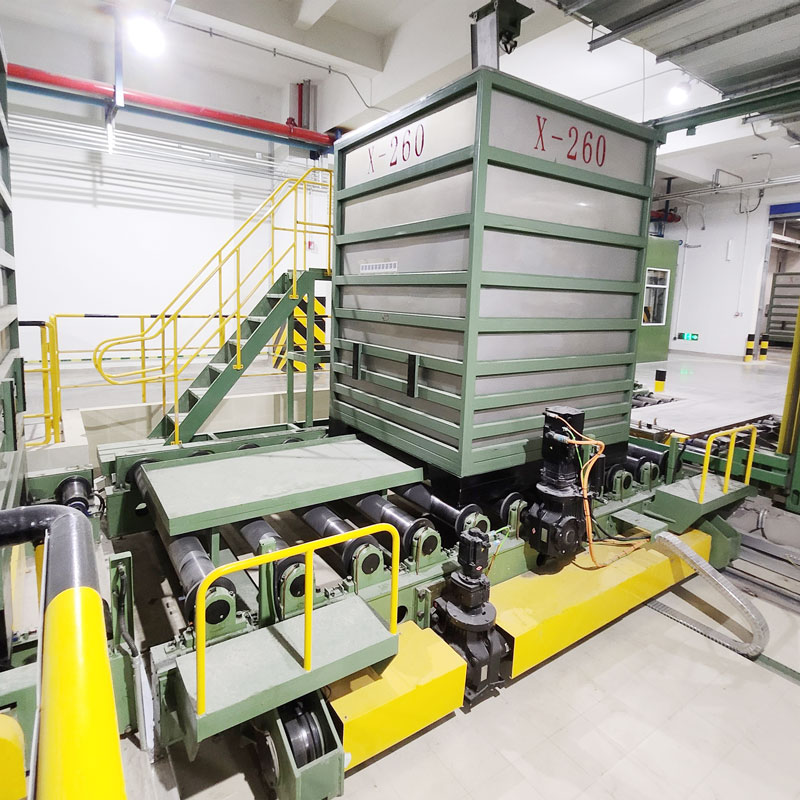 A pilot-scale process supports documented comparison of inputs, operating conditions, and fiber samples.
Use the Pilot Line to Expose Interfaces
Fiber innovation rarely depends on one setting alone. A fiber pilot line can reveal interfaces between material preparation, heat transfer, flow behavior, orientation, handling, controls, and sample testing. That makes it useful for asking better engineering questions before a wider project scope is defined.
Consider a pilot result that looks promising in a small sample. Rather than declaring success, the team can ask: Which input conditions were controlled? Which operating conditions changed? Is the result repeatable? What sample quantity and test method would be required for a meaningful comparison? Which utilities, handling steps, or quality checks may behave differently at larger scale?
These questions make the pilot process slower only in the short term. More importantly, they reduce the risk of treating an unqualified observation as a final specification. A fiber pilot line is therefore a bridge between concept work and an evidence request for the next engineering stage.
From Pilot Observation to Scale-Up Questions
Commercial scale-up should not be assumed from pilot data alone. Residence time, heat transfer, material flow, mechanical loading, control response, collection, and operating routines may change with scale. The appropriate outcome of a fiber pilot line is a ranked list of what has been observed, what remains uncertain, and what must be verified in the next phase.
For teams evaluating pilot plant equipment, this changes the supplier conversation. Instead of asking only which modules are included, ask how trial objectives, interfaces, data capture, sample handling, and later engineering boundaries will be documented. A process-package discussion can then be scoped around real questions rather than generic feature lists.
Suzhou Soft Gem Intelligent Equipment Co.,Ltd. describes whole-project planning, process-package, and engineering-design discussions for fiber-material production projects. For a specific fiber pilot line, the appropriate next step is to confirm the intended material route, trial objectives, site interfaces, and evidence requirements before defining equipment scope.
A Practical Checklist for Functional Fiber Development
- Define the intended fiber function and the decision the trial must support.
- Set a baseline sample and a limited group of variables to compare.
- Document inputs, configuration, settings, adjustments, samples, and observations for every run.
- Separate observed pilot behavior from end-use validation and production-scale conclusions.
- Use results to create a focused scale-up, testing, and engineering-question list.
A well-planned fiber pilot line gives fiber innovation a disciplined route from idea to evidence. Its practical contribution is not a universal result. It is a repeatable way to turn functional fiber development into clearer technical decisions, more useful samples, and better-defined questions for the next stage.



 Hot News