
 EN
Advanced Fibre Making Machine Technology Trends
For a plant engineering team, a fibre making machine is becoming less useful as a stand-alone label. The practical question is how a production line connects material preparation, thermal processing, drawing or forming, controls, quality checks, and day-to-day operating routines. That shift matters because fiber technology development now depends as much on information flow and repeatable decisions as on the mechanical sections themselves.
In the textile industry, advanced equipment discussions increasingly focus on whether a line can make operating conditions visible, make changes traceable, and support a disciplined response when product requirements or feedstock conditions change. This is not a claim that one architecture suits every plant. It is a way to frame the review: define the target fibre and the evidence needed, then assess whether the proposed fibre making machine configuration supports that work.
From isolated equipment to connected production decisions
Earlier comparisons often began with a headline capacity or a list of individual units. Those inputs still matter, but they do not explain how the system will behave across handoffs. A fibre making machine may sit within a chain that includes feedstock preparation, metering, heating, spinning or forming, drawing, crimping, cutting, baling, utilities, and material handling. Each handoff can affect what operators see and what engineers can verify.
One useful shift is moving from feature lists to decision links. Instead of asking only whether a line has a sensor or a control screen, project teams can ask which process condition the signal represents, who reviews it, and what action is defined when it changes. That approach turns a smart factory conversation into an operating-design conversation.
Trend 1: Data visibility is moving closer to the process
Digital monitoring is becoming relevant at more points in a fibre line, from material-condition checks to process stability and quality review. The value is not the quantity of data alone. For a fibre making machine, the more useful question is whether selected signals can be related to the product objective, the process stage, and a documented response path.
For example, teams may want to review temperature, pressure, tension, moisture, drive condition, or material-flow information where those signals are applicable to the process. The exact sensor set is project-specific. What matters is a clear connection between a reading, its operating context, and the quality or maintenance question it helps investigate.
- Define which conditions need routine visibility and which need event-based review.
- Record the product grade, feedstock condition, and operating state around meaningful deviations.
- Keep measurement methods and acceptance criteria separate from unverified performance conclusions.
Trend 2: Smart factory projects are becoming workflow projects
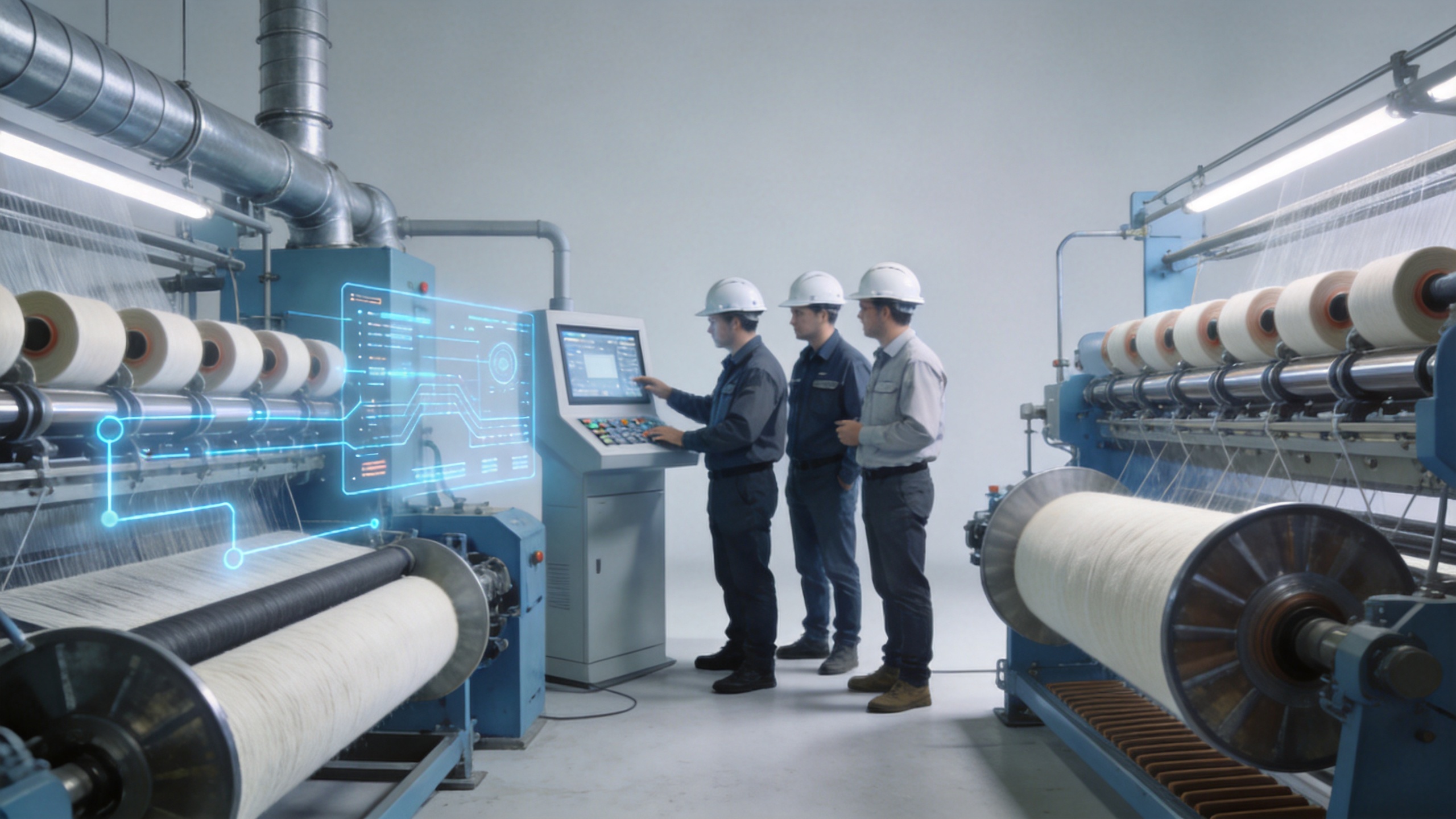
A smart factory is not simply a collection of connected devices. In fibre production, it is a way to coordinate machine data, operator observations, maintenance records, and quality decisions. A fibre making machine becomes more useful in that setting when its controls and information handoff points are reviewed alongside the people who use them.
That is where production innovation becomes practical. A line may support clearer shift handovers when alarms, changes, samples, and maintenance observations are documented in a consistent workflow. It may support engineering reviews when the project team can compare conditions before and after a controlled adjustment. Neither outcome should be presumed from a control system alone; the workflow and responsibilities must be designed around it.
Trend 3: Flexibility needs a defined operating boundary
Many technology conversations use flexibility as a positive label. Yet wider operating options can introduce additional validation, cleaning, changeover, training, or quality-control questions. For a fibre making machine, flexibility is most meaningful when the intended fibre range, raw-material condition, and product-development priorities are documented first.
This is especially relevant to fiber technology development. Pilot observations can inform a later design discussion, but they do not replace scale-specific engineering confirmation. Teams can use trials to identify what must be measured, what assumptions remain open, and which handoff points need attention before a production decision is made.
Trend 4: Quality discussion is shifting toward traceable learning loops
In the textile industry, quality is rarely explained by one setting or one component. A more mature approach links process observations to sampling, test methods, product specifications, and corrective-action records. That link is useful whether the immediate task is product development, troubleshooting, or a new-line evaluation.
For a fibre making machine, a traceable learning loop can include the starting material condition, relevant process settings, sample identification, test results, and the decision made from those results. It does not turn intended properties into assured outcomes. It gives the project team a clearer basis for deciding which changes deserve further review.
Trend 5: Integration questions are gaining weight in equipment evaluation
The machine is not the whole project. A line concept must also fit utility availability, material movement, layout, safety review, maintenance access, controls integration, and documentation needs. When these handoff points are left until after an equipment decision, a seemingly simple comparison can become difficult to interpret.
For that reason, an advanced fibre making machine evaluation should include a common set of boundary questions. Are the scope assumptions clear? Which information must pass between sections? What is included in the operating and maintenance documentation? Which site conditions still need confirmation? This type of review supports production innovation without presenting integration as automatic.
A practical review checklist for technology trends
- Start with the fibre objective. Describe the target product range, development priorities, and evidence needed before comparing machinery.
- Map the process boundary. Include material, thermal, mechanical, control, utility, handling, and operator handoff points.
- Choose data for decisions. Identify signals that can help a team investigate a defined process or quality question.
- Define the workflow. Clarify who reviews records, who authorizes changes, and how deviations are documented.
- Request project-specific proof. Confirm applicable scope, technical documents, test approaches, and site assumptions before treating a capability as established.
How to use these trends in a project discussion
Soft Gem describes its work in the context of whole-project planning, process packages, equipment manufacturing, digital information integration, and lifecycle services. For a potential project, those areas are most useful as questions for a scoped technical discussion rather than as blanket promises. A project team can ask for the relevant process-flow, handoff point, controls, and documentation information, then assess whether it fits the intended application and site conditions.
The practical takeaway is this: the next generation of fibre making machine decisions will be shaped by how well mechanical equipment, production information, and human workflows support one another. When the fibre target, evidence plan, and system boundary are clear, technology trends become a more practical basis for evaluating a line.


 Hot News

