EN
ES Fiber Market Trends and Future Development Opportunities
In this article, ES fiber means a thermally bondable bicomponent staple fiber used in nonwovens and related textile applications, not a broadband service. That clarification matters because the search term is ambiguous. From a plant-engineering perspective, the useful question is not whether ES fiber is simply “growing,” but which end-use specifications, material choices, and production controls are creating viable development paths.
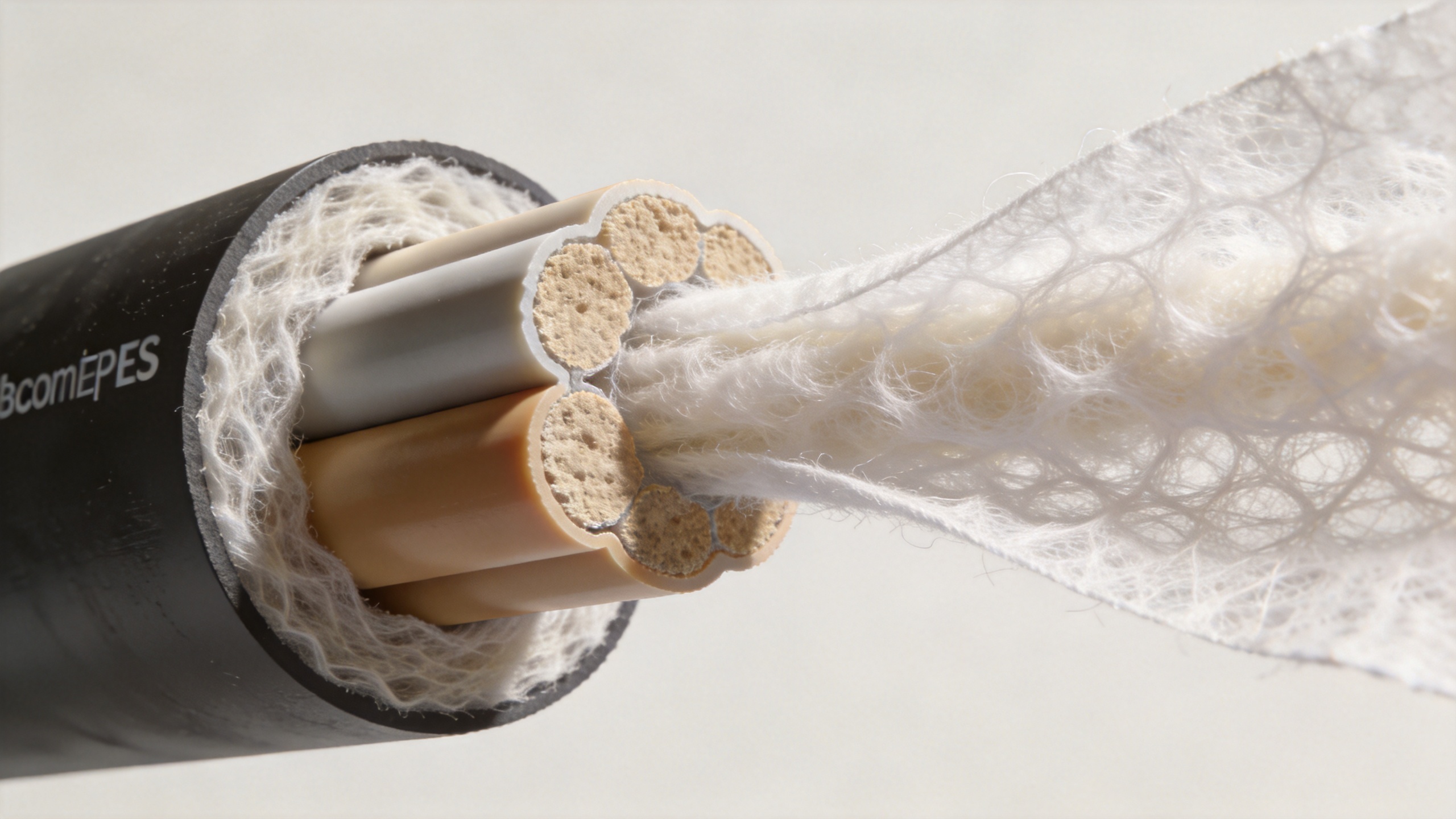
ES fiber is commonly discussed as a sheath-core or side-by-side construction in which components soften at different temperatures. In a typical thermal-bonding concept, the lower-softening component helps form bonds while the other component helps retain web structure. The exact polymer pair, fiber geometry, bonding window, and finished-web target must be confirmed for each project. Still, this basic architecture explains why ES fiber is relevant to the nonwoven market and why it is often reviewed alongside hygiene, filtration, medical, automotive, home-textile, and industrial material applications.
What Is Shaping the ES Fiber Market?
One market signal is the continued need for lightweight webs that can be bonded without adding a separate adhesive layer. For converters, ES fiber can be evaluated as part of a broader route toward thermally bonded nonwovens. The opportunity is not a single universal material answer. It comes from matching ES fiber to the balance of loft, hand feel, strength, permeability, bonding behavior, and downstream converting needs required by a particular application.
The nonwoven market also creates pressure for clearer application segmentation. Hygiene and personal-care materials, filtration media, medical disposables, insulation layers, padding, and selected textile applications do not ask the same questions of ES fiber. A hygiene web may prioritize softness and controlled bonding; a filtration construction may focus on structure and air-flow behavior; a home-textile filling layer may need loft and recovery. Treating them as one demand pool can hide the specification work needed before capacity or equipment decisions are made.
Another shift in fiber industry trends is that buyers increasingly connect material selection with manufacturability. At first this looks like a resin or fiber-selection issue; more precisely, it is a process-and-handoff issue. Feedstock preparation, component dosing, melt stability, spinning, drawing, crimping, cutting, drying, packaging, and quality sampling all influence whether an ES fiber development target can be evaluated consistently.
Development Opportunity 1: Application-Specific Thermal Bonding
The first opportunity is more deliberate customization of ES fiber for individual nonwoven structures. Rather than beginning with a generic product label, development teams can define the web process and desired finished-material behavior. The questions may include:
- Which bonding method will be used: through-air, calender, oven, or another controlled thermal route?
- What degree of bulk, strength, softness, porosity, or dimensional stability is relevant after bonding?
- How will the ES fiber blend with other staple fibers, pulp, or functional layers?
- Which samples and tests will distinguish a promising trial from a repeatable production result?
These questions give ES fiber development a clearer commercial boundary. They also make it easier for technical, production, quality, and procurement teams to compare alternatives using the same criteria. A specification-led approach is particularly useful where a fiber must work inside a multilayer web rather than as a stand-alone material.
Development Opportunity 2: Sustainable Materials With Evidence Boundaries
Sustainable materials are a major discussion area, but ES fiber claims need a narrower lens than a broad environmental label. Research into circularly recyclable low-melting bicomponent polyester fibers points to a meaningful development direction: designing fiber systems with end-of-life considerations visible earlier in material selection. That does not establish the same outcome for every commercial ES fiber grade, nor does it remove the need to verify local collection, sorting, contamination, and processing conditions.
For ES fiber projects using recycled or lower-impact inputs, the useful shift is to treat feedstock as a design input rather than a background assumption. Incoming material variation can affect color, moisture management, melt behavior, and the questions that should be monitored downstream. Traceability documents, incoming inspection criteria, and application-appropriate test plans are therefore part of a credible sustainable-materials discussion. Additional detail does not necessarily create more certainty: a concise list of verified inputs and test conditions is more useful than an unsupported environmental statement.

Development Opportunity 3: Process Data and Quality Loops
Future ES fiber development will also depend on how well plants connect process observations to finished-fiber evaluation. By process handoff, we mean the handoff points where material, thermal conditions, mechanical settings, controls, and operating responsibilities connect. A plant may collect many parameters, but the key is deciding which ones relate to the intended fiber outcome and which require investigation when variation appears.
For example, an ES fiber trial should record its material formulation boundary, targeted geometry, operating window, sample location, bonding conditions, and evaluation method. This creates a useful quality loop from spinning through web formation and bonding. A pilot observation is not automatically a production conclusion because scale, residence time, handling, and web-converting conditions may change. Recording what remains unknown is therefore a practical way to move from trial learning to engineering review.
What This Means for Textile Applications and Fiber Producers
For textile applications, the future of ES fiber is likely to be shaped by fit rather than by a single market narrative. Some applications may value low-temperature bonding behavior; others may need a specific balance of loft, resilience, touch, filtration, or composite-web compatibility. The same distinction matters for fiber producers. A larger capacity target can expose bottlenecks outside the core spinning section, including utilities, material transfer, controls, laboratory capability, and commissioning readiness.
Soft Gem’s stated scope in fiber-material plant planning, process packages, engineering design, equipment manufacturing, and digital information integration can be a useful discussion framework for teams mapping these handoff points. Project-specific capabilities, performance targets, and line scope should be confirmed through technical documentation and engineering review. No matched product detail was provided for this article, so no product link is included.
A Practical ES Fiber Development Checklist
- Define the end-use and the nonwoven or textile process before selecting an ES fiber concept.
- Document the component system, feedstock condition, target geometry, and intended bonding route.
- Set evaluation criteria for the finished web, not only for the unbonded ES fiber.
- Map process handoff points, including utilities, material handling, controls, quality sampling, and handover responsibilities.
- Separate observed trial results from conclusions that still need scale-up validation.
- For sustainable materials claims, request traceability and testing evidence that matches the stated claim.
ES fiber development is most useful when it is treated as a connected material-and-process decision. The next step is to translate the target application into a defined fiber specification, a bounded trial plan, and an evidence list for engineering confirmation. That approach supports a clearer response to evolving fiber industry trends without turning early market signals into unsupported promises.



 Hot News