
 EN
Sustainable Fiber Production Technology for Future Manufacturing
For manufacturers, biodegradable fiber is not just a material question. It is a production-system question that joins feedstock, polymer behavior, fiber specification, process controls, quality checks, and an intended end-of-life route. From a plant engineering planning perspective, the useful starting point is the production objective: which application is being served, what properties must the fiber deliver during use, and what evidence will support the environmental statement after use?
That distinction matters because a biodegradable fiber can be discussed responsibly only with its conditions attached. A resin family, a laboratory result, and a finished textile article do not automatically behave in the same way. Sustainable fiber technology therefore asks manufacturing teams to connect a material choice with a defined conversion process, realistic disposal context, and a verification plan.
Start with the target specification, not the equipment list
A biodegradable fiber project often begins with a machine question: which spinning line or downstream module is needed? A more durable planning sequence starts with the target fiber. Define the intended application, linear density range, staple or filament format, strength and elongation window, finish requirements, color route, and downstream conversion steps. Then identify which requirements are essential and which can be tested during development.
At this stage, sustainable fiber technology becomes practical. The selected polymer or blend must be considered alongside drying behavior, melt stability, filtration needs, spin-pack configuration, quench conditions, draw ratio, crimping or winding method, and moisture management. Each connection can affect the consistency of a biodegradable fiber. A stated capacity target alone does not show whether utilities, material handling, controls, and commissioning plans are ready to support it.
A biodegradable fiber line should therefore be assessed as a linked system. Treat feedstock as a design input rather than a background assumption. Lot-to-lot variation, storage conditions, reclaimed-content policy where relevant, and incoming inspection all shape the questions that an engineering team should resolve before scaling.
Map material decisions to the production route
The route to a biodegradable fiber is not a universal recipe. Some programs may investigate cellulosic or protein-based inputs; others may evaluate polymers or blends intended for a managed end-of-life pathway. The right route depends on the target application and validated material data. Rather than using a broad environmental label as a shortcut, establish the processing window that the selected material can support.
- Feed and preparation: record incoming material condition, drying requirement, contamination controls, and traceability points for each biodegradable fiber development batch.
- Forming and orientation: relate temperature profile, residence time, filtration, quenching, and draw settings to measurable fiber properties rather than presumed outcomes.
- Finishing and conversion: review spin finish, cutting, crimping, winding, bonding, dyeing, and textile conversion for compatibility with the biodegradable fiber objective.
- Quality release: define which physical tests, chemical checks, and retained samples are needed to compare pilot and production results.
The mapping supports eco friendly production by revealing where resource use, yield loss, rework, and quality variation need attention. It also avoids treating a material claim as separate from the way the fiber is made.
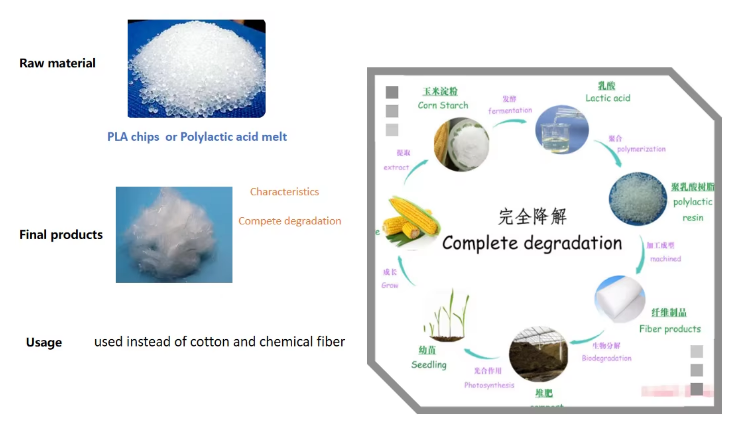 A process view helps connect material selection, fiber formation, and quality evaluation.
Design controls around evidence, not assumptions
For a biodegradable fiber, the most valuable control plan links each critical setting to a measurable response. Examples may include melt or solution condition, pressure trend, moisture level, temperature profile, line speed, drawing conditions, and finished-fiber tests. The exact parameters require material-specific engineering review; the planning principle is to make deviations observable and traceable.
A digital production record can help teams compare trials without turning every difference into a conclusion. Capture batch identity, relevant setpoints, alarms, samples, test methods, and disposition decisions. This gives green manufacturing a clearer operational basis: process improvements can be evaluated against stated objectives, such as stable quality, reduced avoidable waste, or a more suitable operating window, rather than against vague marketing language.
Soft Gem describes its work in terms of integrated fiber-material plant planning, process-package discussion, engineering design, equipment manufacture, digital information integration, and life-cycle service. In a project discussion, that positioning can help organize the material-flow, utility, control, and commissioning connections for a biodegradable fiber program. The appropriate scope and any resulting performance expectations should be confirmed for the specific project.
Separate biodegradability from a generic disposal claim
The phrase biodegradable fiber needs a defined context. Conditions such as temperature, moisture, oxygen availability, microbial activity, item geometry, additives, textile construction, and local collection infrastructure can influence end-of-life behavior. A fiber that is being evaluated for one managed environment should not be described as having the same outcome in every setting.
Standards can guide the evidence conversation. ASTM D6400 concerns plastics and products intended for municipal or industrial aerobic composting facilities. EN 13432 addresses packaging recoverable through composting and biodegradation. ISO 14855-2 describes a method for determining ultimate aerobic biodegradability of plastic materials under controlled composting conditions. These references do not certify a particular biodegradable fiber or textile article by themselves. They indicate why the test method, sample form, disposal route, and documentation must match the statement being made.
Before communicating a biodegradable fiber claim, define the product boundary and ask for relevant technical documentation, laboratory scope, acceptance criteria, and claim-review ownership. This evidence-first approach makes biodegradable materials easier to evaluate across R&D, operations, quality, procurement, and marketing teams.
Build a scale-up plan for future manufacturing
Moving a biodegradable fiber concept from pilot work to a production line calls for staged decisions. Start with a specification sheet and material data package. Use trials to identify process sensitivities. Review whether utilities, material logistics, quality sampling, and operator procedures can support the target route. Then set a commissioning plan that compares agreed samples and operating conditions before a wider release.
A practical review can include the following questions:
- Which end-use properties must the biodegradable fiber meet, and how will they be measured?
- Which feedstock characteristics are controlled at receipt and during storage?
- Which process settings are critical to quality, and which records will show their history?
- Which disposal condition is relevant to the intended claim, and what evidence applies to the finished construction?
- Which changes to utilities, handling, safety review, or training are needed before scale-up?
The result is a sequence of engineering decisions for sustainable fiber technology. It also gives teams a disciplined way to compare alternatives without implying that one material or process fits every plant.
A responsible direction for biodegradable fiber programs
Future manufacturing will reward clearer links between material design, manufacturing discipline, and evidence. A biodegradable fiber program is stronger when its technical target, production route, control plan, and end-of-life statement are reviewed together. Begin with the application, map the process connections, validate the relevant conditions, and keep claims aligned with the available evidence. That is a useful foundation for eco friendly production and more credible green manufacturing decisions.


 Hot News

