
 EN
Automatic Fiber Making Machine for High Efficiency Production
Choosing a fiber making machine for an automated plant is not only a capacity decision. It is a system decision that connects the intended fiber, raw-material condition, material flow, thermal and mechanical stages, controls, utilities, and commissioning plan. A stated output target does not by itself show that those interfaces are ready to support it.
For teams evaluating automatic fiber equipment, the useful starting point is the target application. Polyester staple fiber, recycled-PET fiber, hollow or conjugated products, and other fiber programs can place different demands on preparation, process settings, handling, and finished-fiber evaluation. This article outlines a practical way to review a fiber making machine without turning an automation feature list into an unsupported production promise.
Start With the Fiber Objective, Not the Machine List
A complete fiber making machine is often discussed as though it were one unit. In practice, it may involve linked preparation, conversion, drawing or downstream treatment, handling, control, and quality-verification interfaces. The exact scope should be confirmed for the project rather than assumed from a broad product label.
Before comparing fiber machinery, document the questions that shape the line concept:
- What material and feedstock condition are expected at the line inlet?
- Which fiber characteristics and end-use requirements must be evaluated?
- What operating range, changeover needs, and traceability expectations matter?
- Which utilities, layout constraints, and material-handling responsibilities belong to the site?
- What evidence will be used during trials, commissioning, and ongoing quality review?
A practical observation is that early questions often reveal missing specification detail, not missing equipment. If the fiber objective is still broad, a longer machine feature list rarely resolves the selection.
What Automation Should Coordinate
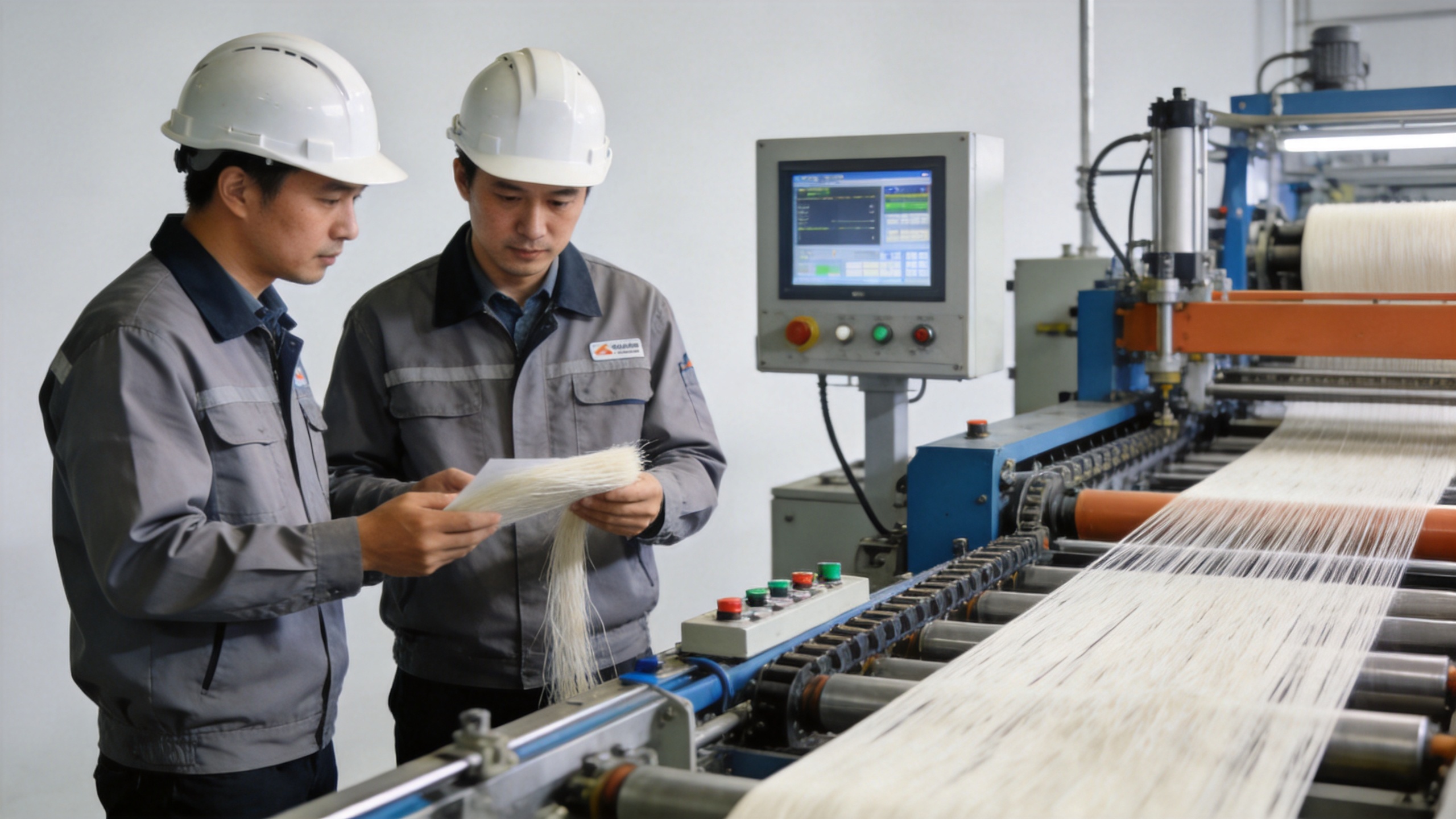
Production automation can support repeatable workflows when it is designed around the process rather than added as an isolated dashboard. In a fiber-production setting, the control discussion may cover material movement, setpoint management, alarms, recipes, records, operator actions, and handoffs between subsystems. The relevance of each function depends on the material, product target, operating practice, and site architecture.
So smart manufacturing is better evaluated as an information and decision framework. A control screen can provide visibility, but visibility only helps when the measured signals, escalation rules, and response responsibilities are defined. Where AI-assisted or data-driven functions are considered, teams should also clarify human oversight, data boundaries, and validation before relying on recommendations.
Separate Capacity From Production Readiness
A capacity target is not a substitute for reviewing utilities, material handling, controls, and commissioning interfaces. For example, a line may have a nominal throughput concept, while actual readiness still depends on incoming-material consistency, buffer arrangements, utility availability, downstream handling, and the agreed test method. Those dependencies should be visible in the engineering discussion.
When comparing an automatic fiber equipment proposal, ask which assumptions sit behind the stated production scenario. This keeps capacity, operating conditions, and acceptance criteria in the same conversation.
A Review Framework for an Automatic Fiber Making Machine
| Review area | Questions to confirm | Why it matters |
|---|---|---|
| Feedstock and preparation | What input condition is assumed? How will variation be assessed? | Input condition can influence downstream process decisions and evaluation needs. |
| Process and equipment scope | Which stages are included, excluded, or supplied by other parties? | Shared boundaries make fiber machinery proposals comparable. |
| Controls and records | Which parameters are visible, recorded, alarmed, or adjusted under defined permissions? | Useful production automation depends on actionable information and clear workflows. |
| Utilities and layout | What site interfaces, access requirements, and handoffs need confirmation? | A line concept must fit the actual installation environment. |
| Verification and commissioning | What samples, records, tests, and decision gates will be used? | Desired results need a defined evaluation method rather than an assumed outcome. |
Use Smart Manufacturing as a Disciplined Operating Model
The point of smart manufacturing is not simply to collect more data. It is connecting relevant process information with an operating routine: who sees an exception, what is checked, how changes are authorized, and how observations are recorded for the next review. For a fiber making machine, that may mean mapping records to material lots, operating conditions, maintenance observations, or finished-fiber checks as appropriate to the project.
Teams should avoid assuming that automation removes the need for engineering judgment. If feedstock condition varies or the product mix changes, the review should include input-quality questions before drawing conclusions from a dashboard trend. The option is worth exploring when the stated input conditions and production objectives match the proposed scope.
Questions to Put Into an RFQ
Before shortlisting a fiber making machine, ask suppliers to define the conditions behind their proposal. The longest feature table may be misleading if alternatives are not compared against the same scope.
- What target fiber application and input conditions are being used for the concept?
- Which process stages and auxiliary systems are included in the quoted fiber machinery scope?
- What control functions are proposed, and which actions remain with operators or site systems?
- What site information is required to review layout, utilities, safety, and handling interfaces?
- What commissioning records and finished-fiber evaluation criteria should be agreed before acceptance discussions?
Suzhou Soft Gem Intelligent Equipment Co., Ltd. describes its work around whole-project planning, process packages, equipment manufacturing, digital information integration, performance-assurance discussions, and lifecycle services. For a specific project, request the applicable scope, technical documentation, and engineering confirmation rather than relying on generalized claims.
Build Efficiency Around Confirmed Interfaces
High-efficiency production is more credible when the team connects the fiber objective to process choices, controls, site readiness, and verification. An automatic fiber making machine can be assessed more clearly when automation is treated as part of a coordinated production system—not as a shortcut around material, engineering, or operating decisions.
What information would your engineering, production, quality, and procurement teams need to confirm before comparing two automated line concepts? A shared answer can turn an early equipment inquiry into a more useful project brief.



 Hot News

