EN
How Does a Recycled Fiber Machine Work?
A recycled fiber machine is not one isolated unit. It is a coordinated recycling production system that prepares waste, separates unsuitable material, restores usable fiber or polymer, and delivers material in a form that downstream spinning, nonwoven, filling, or compounding operations can use. The route depends on the feedstock. Textile offcuts and used garments usually follow a mechanical opening route, while clean PET feedstock can follow a melt-processing route to make staple fiber.
From a recycling process perspective, the key question is not simply whether material can be processed. It is whether the incoming material is consistent enough for the next machine. Feedstock composition, contamination, moisture, color mix, and target fiber specification all influence how fiber recycling equipment is configured.
Start With Feedstock Identification and Preparation
Every reliable line begins by defining what enters it. For textile waste recycling, operators may receive cutting scraps, post-industrial waste, garments, nonwovens, or fiber residues. These materials can differ in fiber type, fabric construction, trims, coatings, and moisture. A receiving and sorting area separates material by composition and removes items that could damage downstream equipment, such as metal parts, hard plastic, or oversized pieces.
For PET-based input, preparation typically includes collection, sorting, size reduction, washing, and drying. The purpose is to present clean, dry flakes or other suitable feedstock to the thermal section. A recycled polyester machine needs stable input because moisture and contaminants can affect melt handling and filtration. For textile input, preparation focuses more on composition control and the removal of foreign matter before tearing and opening.
Mechanical Textile-to-Fiber Processing
Mechanical fiber recycling equipment turns fabric waste into spinnable or blendable fiber through a series of controlled physical actions. The exact arrangement varies, but the functional sequence is easy to follow.
- Feeding and metering: A conveyor or feeder delivers a steady layer of prepared waste. Even feeding helps each downstream section work at a consistent load.
- Cutting or shredding: The material is reduced to smaller pieces. This opens the fabric structure and makes it easier to handle, but aggressive settings can shorten recovered fibers.
- Opening: One or more opening units use pins, licker-in rollers, or similar working elements to tease apart the fragments. The aim is to release fibers while limiting unnecessary damage.
- Cleaning and separation: Airflow, screens, magnets, and dust-removal components separate lint, dust, and remaining foreign particles. The layout depends on the contamination profile.
- Blending and carding: Recovered material can be blended with compatible fibers, then carded to align and form a more even web or sliver for the intended next process.
This route shows why textile waste recycling is a system problem. Shredding alone reduces size; it does not establish fiber quality. Settings for feed rate, roller speed, wire clothing, air volume, and cleaning intensity need to be considered together. If the opening action is too harsh, staple length can fall. If it is too gentle, unopened tufts and contaminants may remain.
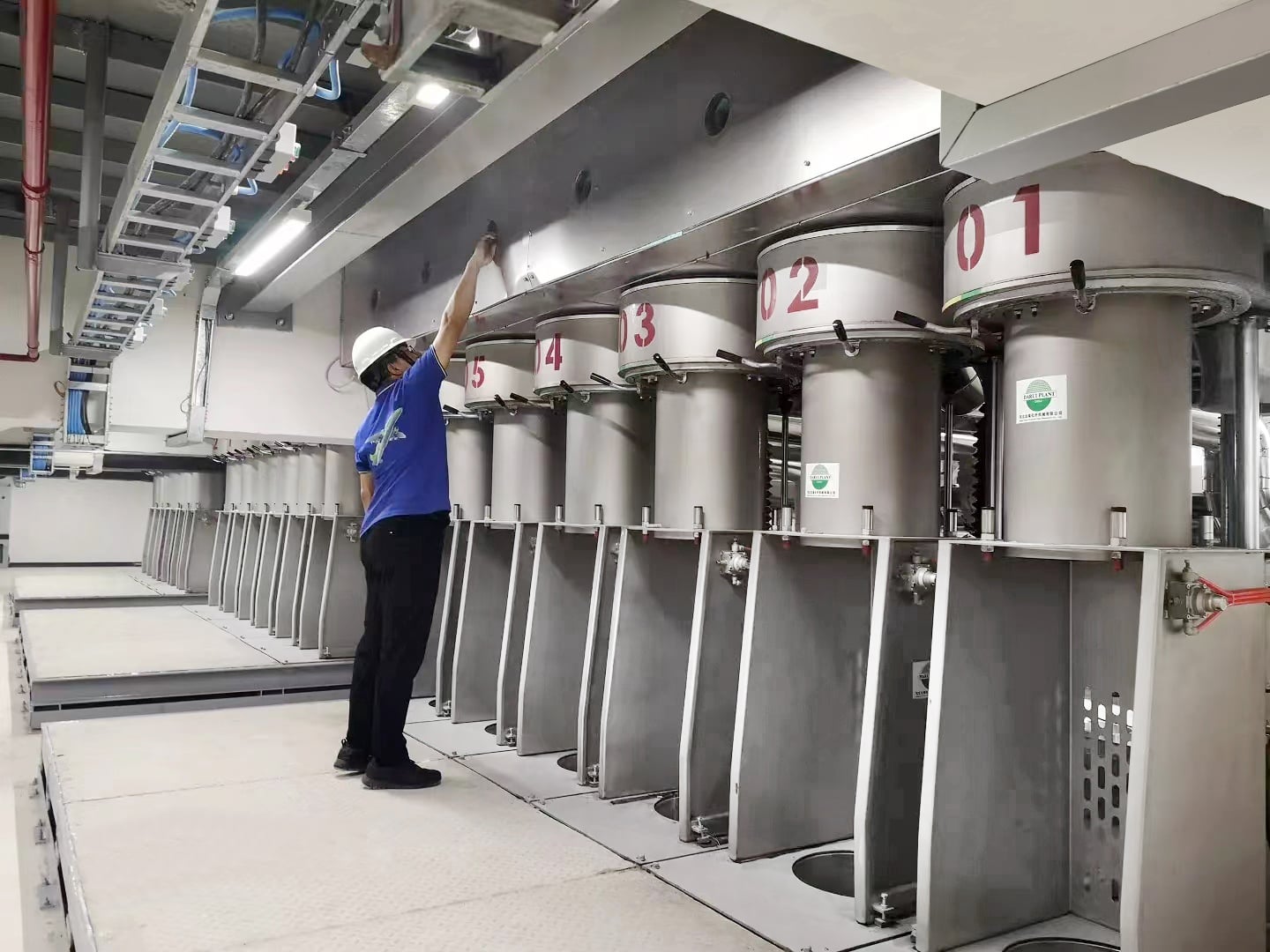 Mechanical processing stages that prepare textile waste for fiber recovery.
How a Recycled Polyester Machine Forms New Fiber
A recycled polyester machine uses a different route when the feedstock is suitable PET material. After prepared PET is dried, the material is melted and passed through filtration to remove fine contaminants. The filtered melt is metered toward a spinneret, where it emerges as many continuous filaments. Cooling air helps the filaments solidify before they are collected and drawn.
Drawing stretches the filaments to orient the polymer structure. For staple products, the tow may then be crimped, relaxed or heat treated as required, and cut to a chosen length. The output is recycled fiber intended for a defined downstream use, not a generic material that fits every application. Feedstock cleanliness, melt filtration, stable temperature control, and controlled drawing all affect whether the line produces a consistent result.
What the Controls Are Doing Throughout the Line
Modern fiber recycling equipment uses controls to connect each stage instead of treating it as a set of separate machines. Sensors and operator checks can track material flow, motor load, temperature, pressure, moisture, and waste removal. A rising load at an opening unit, for example, may indicate a feed change or a blockage. In a melt route, changes in pressure across a filter can indicate that the filtration section needs attention.
The operating team also manages the link between output targets and incoming material. If a customer needs a particular staple length, blend ratio, bulk, or cleanliness level, the recycling production system needs a documented way to adjust settings and verify the output. This is why a pilot trial with representative feedstock is useful before a full-scale line is specified: it exposes how the real waste stream responds to handling and processing.
Choosing the Right Process Route
| Question | Why it matters |
|---|---|
| What is the feedstock composition? | Single-polymer or well-sorted material is handled differently from mixed textiles. |
| What contamination is present? | Trims, dust, coatings, moisture, and color mix influence preparation and separation needs. |
| What form is required at the outlet? | Opened fiber, carded web, sliver, tow, or cut staple fiber calls for different downstream sections. |
| How variable is the incoming material? | High variability raises the importance of sorting, buffering, metering, and process monitoring. |
A practical specification therefore starts with samples and target output rather than a machine name alone. For a textile route, document fabric categories, blend ratios, expected contaminants, and the acceptable range of recovered-fiber characteristics. For a PET route, document flake quality, moisture-control needs, filtration expectations, and required fiber form. These inputs help a project team compare a mechanical recycling line with a recycled polyester machine configuration on the right basis.
Where the System Delivers Value
A well-planned recycled fiber line gives operators a repeatable way to convert a defined waste stream into material for the next manufacturing step. The value comes from matching preparation, processing intensity, cleaning, and output handling to that stream. It does not come from applying one setting to every type of waste.
For companies evaluating fiber recycling equipment, the useful next step is to map the current waste sources, test representative samples, define the target fiber application, and review the interfaces between each process section. That approach makes textile waste recycling a controlled production activity rather than a collection of isolated machines.


 Hot News