
 EN
How Is Polyester Fiber Made? A Complete Manufacturing Guide
For teams planning or reviewing a fiber plant, making polyester fiber is easier to understand when the process is viewed as a controlled sequence rather than a single melting step. A typical route converts PET polymer into continuous filaments or staple fiber through preparation, melt processing, spinning, and downstream treatment. The equipment layout and operating windows vary with the product specification, but the material flow follows a recognizable logic.
What material is used when making polyester fiber?
Most polyester textile fiber is based on polyethylene terephthalate, commonly called PET. Virgin PET may be made from chemical feedstocks such as purified terephthalic acid and ethylene glycol. Depending on the application and material-control plan, a PET fiber production route may also use recycled PET feedstock that has been sorted, cleaned, processed, and qualified for the intended line. The important issue is not simply the source of the polymer; it is whether moisture, contamination, intrinsic-viscosity requirements, and additives are managed for the planned product.
Before melting, PET is commonly dried. Water carried into high-temperature processing can contribute to polymer degradation, so drying is a practical quality-control step. Material preparation also gives the plant a point to verify lot identification, blend ratios, and feed consistency before the polymer reaches the extruder.
The polyester fiber process: from polymer to heated PET melt
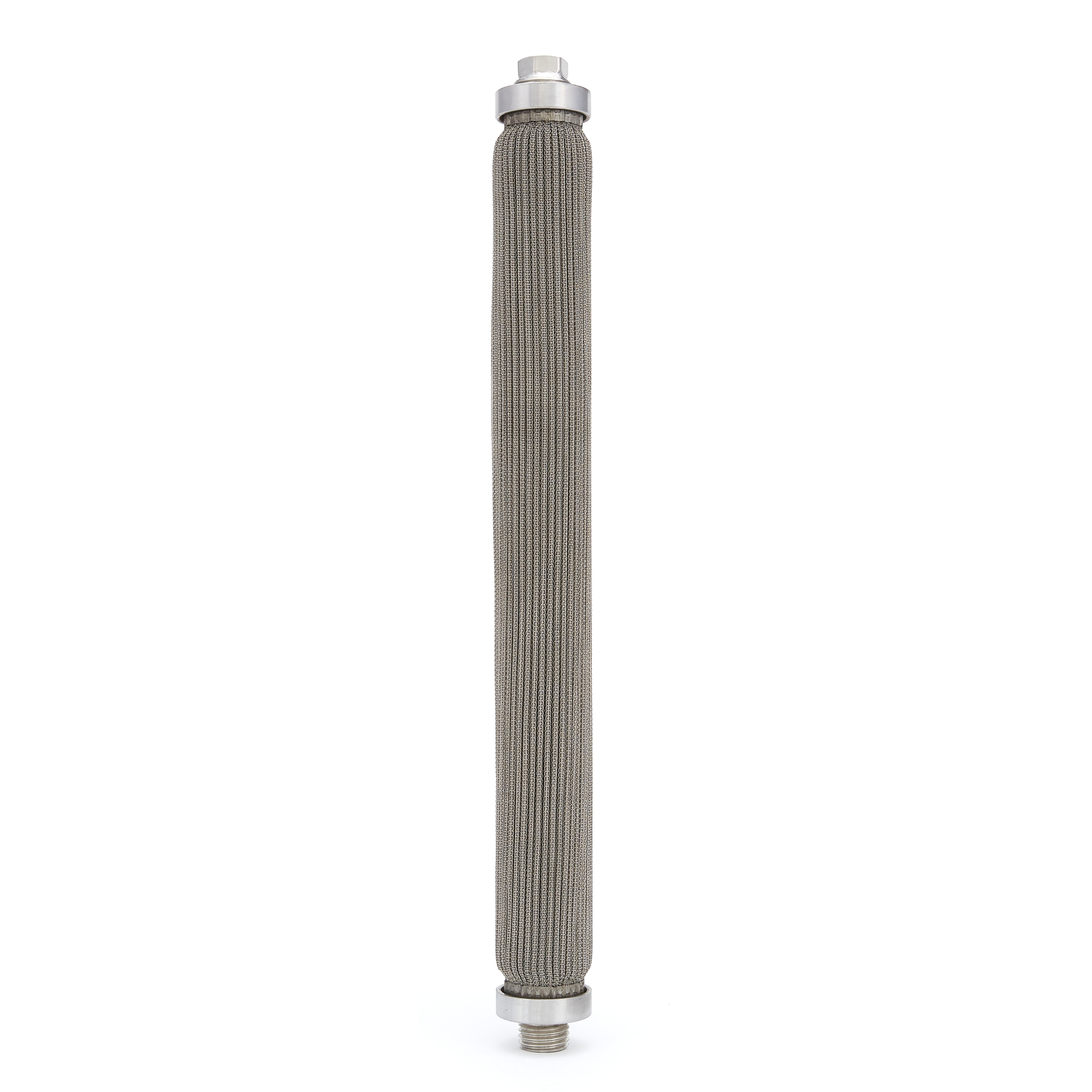
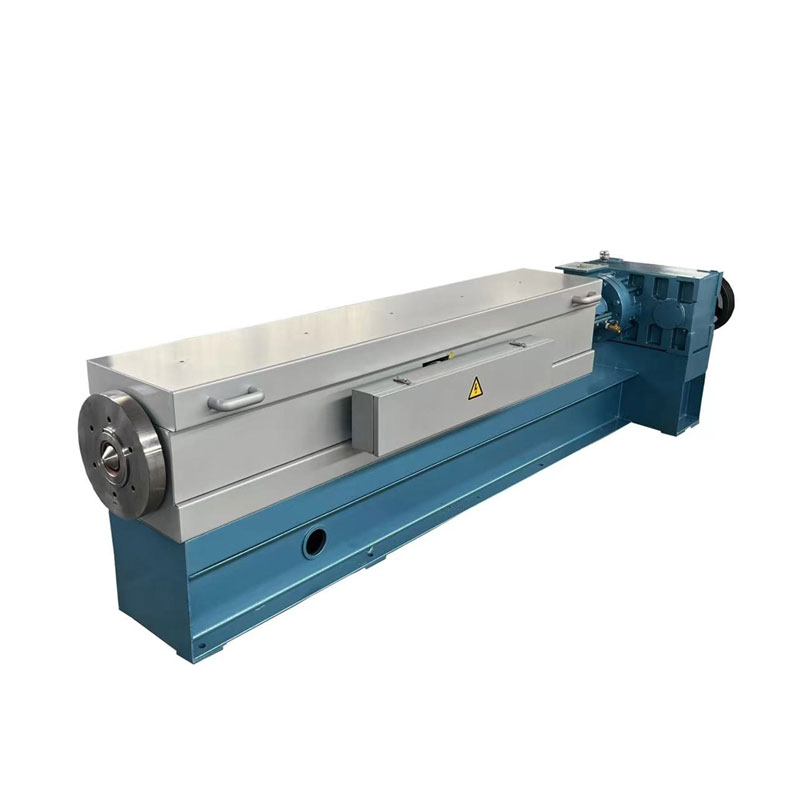
In a conventional polyester fiber process, prepared PET chips or flakes enter an extrusion section. The screw conveys, heats, and homogenizes the polymer until it becomes a stable melt. A filtration stage then removes gels or other particles that could interrupt spinning or show up as defects in the filaments. Melt temperature, pressure, residence time, and filter condition are monitored because they affect how steadily the material reaches the spinning position.
This is where process planning matters. A line designed for one denier range, polymer grade, or output form may need different spinning-pack, quench, and winding arrangements from another. Treating the line as a connected system helps production and engineering teams trace variation back to its likely stage instead of adjusting downstream equipment without a clear cause.
How melt spinning forms polyester filaments
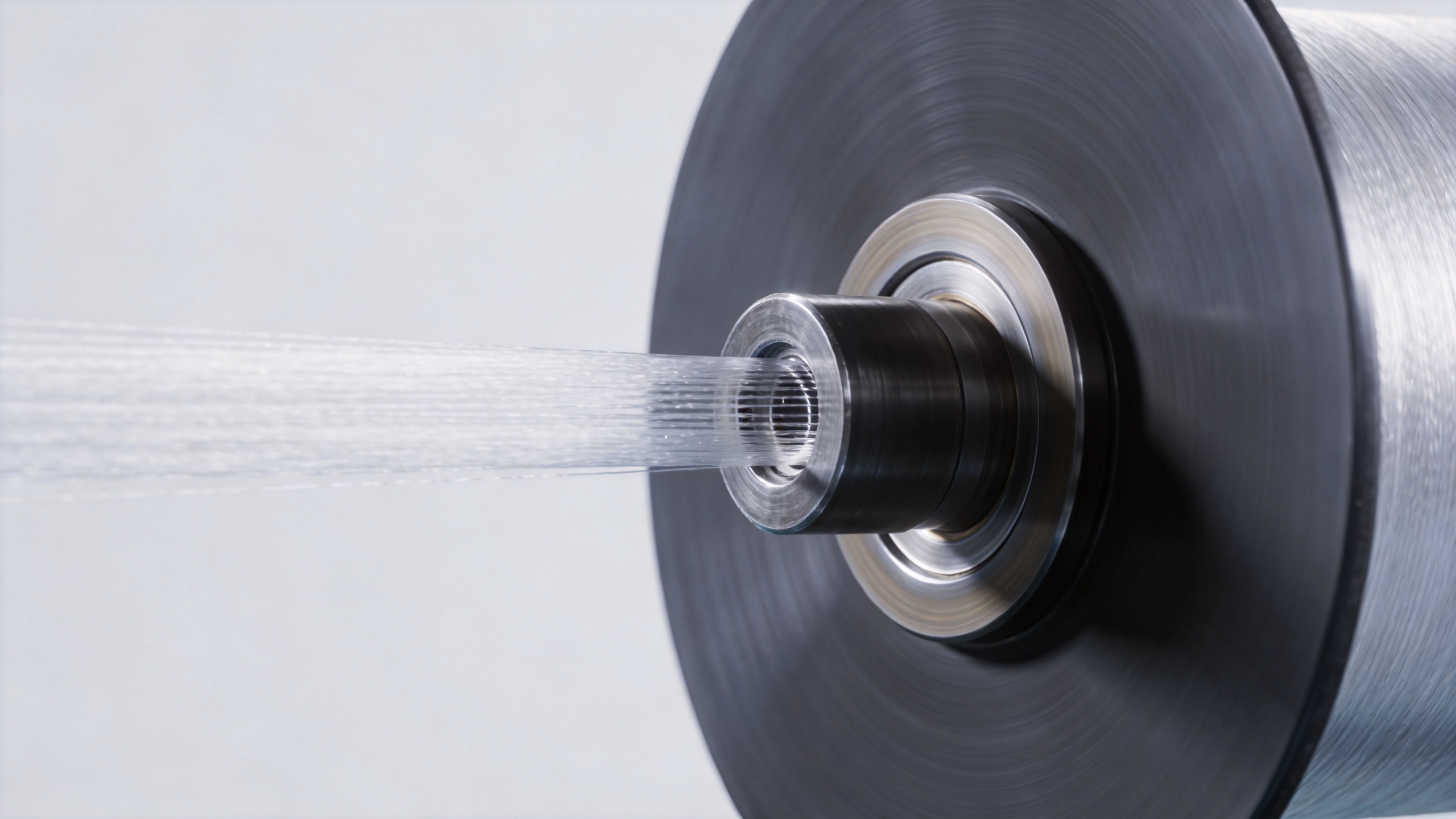
The defining step in making polyester fiber is melt spinning. Metered heated PET melt passes through a spinneret, a plate with many fine holes. Each opening forms a stream that becomes a filament as it exits. The fresh filaments are cooled, often by controlled air, until they can be gathered into a yarn bundle or tow. This is the basic synthetic fiber manufacturing principle: shape the melt, remove heat in a controlled way, and preserve a stable path for each filament.
Spinneret design, polymer cleanliness, metering stability, and quench-air uniformity all deserve attention. Uneven conditions can create differences between filaments, which is why a well-organized fiber production line links spinning conditions with upstream melt quality and downstream drawing results. Operators typically review process trends rather than relying on one reading alone.
Drawing: building orientation into the fiber
After the filaments have solidified, they are drawn under controlled tension. Drawing aligns polymer chains more strongly along the fiber axis and reduces the diameter of the material. The selected draw ratio, temperature path, and line speed depend on the required fiber type and specification. For filament yarn, the material may be wound after the selected treatment sequence. For staple products, the continuous bundle is generally handled as tow before further conversion.
It is useful to separate the concepts of spinning and drawing. Spinning creates the initial filaments; drawing develops their orientation and dimensions. In practical PET fiber production, these stages must be coordinated because a change in one stage can alter the settings needed in the next.
How polyester staple fiber is finished
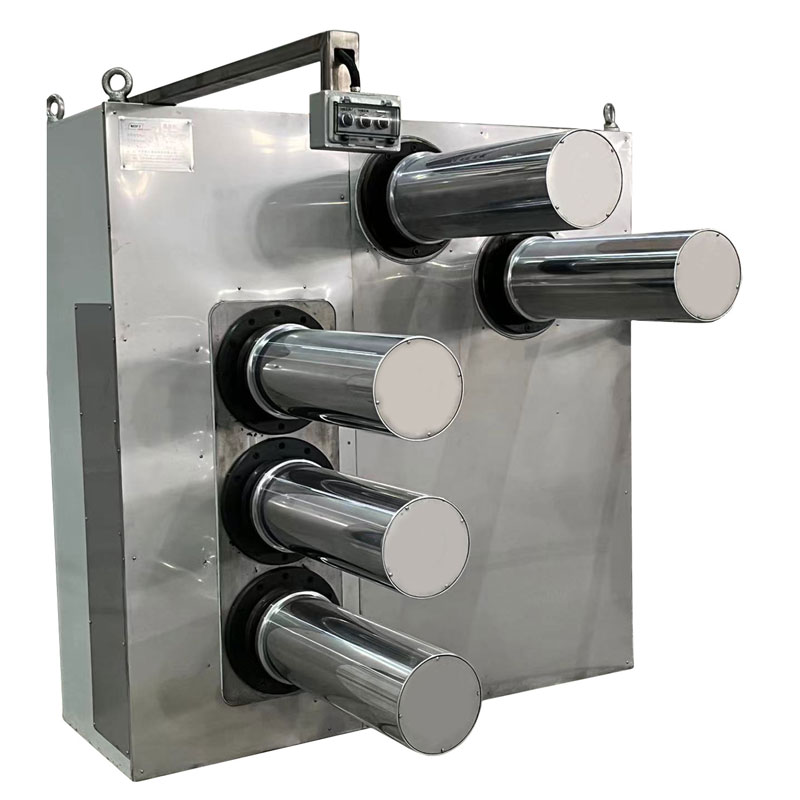
When the target is staple fiber, the tow goes through additional steps after spinning and drawing. A representative route can include drawing, crimping, heat setting, cutting, and baling. Crimping gives the fiber a three-dimensional wave that helps it behave differently from a smooth continuous filament in subsequent textile processing. Heat treatment can stabilize the chosen structure, while cutting converts the tow into the intended staple length.
Spin finish may be applied before or during downstream handling to support transport and later processing. The exact chemistry and application method should be selected for the fiber grade and its intended use. A plant should document these choices alongside material and operating records, especially when changing product specifications.
Filament versus staple: two outputs from related equipment
| Output route | Typical downstream focus | Planning question |
|---|---|---|
| Continuous filament | Cooling, interlacing or winding, and package formation | What yarn characteristics and package format are required? |
| Staple fiber | Tow handling, drawing, crimping, heat treatment, cutting, and baling | What length, crimp, and handling conditions suit the next textile process? |
Both routes begin with controlled melt spinning, yet their downstream sections solve different material-handling problems. This distinction is helpful when defining a fiber production line because it keeps the equipment scope connected to the product form rather than to a generic label.
Process controls to review on a fiber production line
- Feedstock readiness: Confirm material condition, drying strategy, and traceability before extrusion.
- Melt stability: Track temperature, pressure, filtration condition, and residence time as a connected set of signals.
- Spinning consistency: Review metering, spinning-pack condition, spinneret cleanliness, and quench-air balance.
- Draw and finishing settings: Relate tension, speed, thermal treatment, crimping, and cutting to the specified output.
- Inspection and records: Use defined sampling and process records to support troubleshooting and specification review.
For organizations evaluating synthetic fiber manufacturing equipment, the useful question is not only which machine is installed. It is how material preparation, spinning, downstream treatment, utilities, controls, and inspection points work together. Suzhou Soft Gem Intelligent Equipment Co., Ltd. describes its role as supporting integrated fiber-material plant planning, process-package and engineering discussions; the suitable scope for any project should be confirmed against its material, output, and site requirements.
A practical sequence for planning PET fiber production
- Define the target fiber form, specification, and downstream application.
- Confirm the PET feedstock route and the material-control requirements.
- Map the process from drying and extrusion through spinning and final handling.
- Identify the measurements that show whether each stage is stable.
- Review how utilities, layout, automation, and quality checks support the selected process path.
Making polyester fiber is therefore a series of linked manufacturing decisions. Clear specifications, stable melt processing, controlled spinning, and the right downstream route give engineers a sound basis for discussing a PET fiber production project without assuming that every product uses the same line configuration.


 Hot News

