EN
Polyester Staple Fiber Production: From Raw Material to Finished Fiber
Making polyester fiber is often described as melting PET and pulling it into strands. That summary is useful, yet it misses the process interfaces a team needs to assess a staple-fiber line. From a fiber-process technical advisory perspective, the starting point is the target fiber specification, the feedstock condition, and the compatibility of each stage—not an isolated machine feature.
This article follows the feedstock-to-fiber chain. It explains the main fiber production steps, what each one is intended to do, and which questions belong in an engineering review. Exact settings depend on the polymer grade, product specification, line design, and site conditions, so the discussion is a planning framework rather than an operating recipe.
Start with the PET raw material and the required fiber
Making polyester fiber can begin with virgin polymer chips, polymer made from chemical feedstocks, or prepared recycled PET input. In every case, the PET raw material is a design input. Its condition affects material handling, drying, melt behavior, filtration, and the consistency of downstream processing.
PET is hygroscopic, which means it can take up moisture from its surroundings. Before melt processing, teams commonly review drying and material-handling controls because excessive residual moisture can contribute to hydrolysis and a change in melt viscosity. This is not simply a housekeeping issue: feedstock condition should be considered alongside the intended denier, cut length, crimp level, end use, and quality-verification plan.
At this point, making polyester fiber becomes a specification exercise. A line intended for filling, nonwovens, yarn spinning, or another application may require different decisions about fiber dimensions and downstream treatment. The useful shift is to treat feedstock as a controlled process input, not as a background assumption.
Polymer preparation, melting, and filtration
In the polyester fiber manufacturing process, dried PET is fed into a melting and conveying section. The goal is to create a stable, homogeneous polymer melt for spinning. Equipment configuration is evaluated together with temperature control, residence time, pressure stability, material flow, and the way the line avoids areas where polymer may remain too long.
Filtration and distribution are then used to prepare the melt for the spinning position. A spin pack generally combines filtration, distribution passages, and the spinneret. For teams planning making polyester fiber, it is helpful to ask what material-quality checks are in place upstream, how filter changes are handled, and which process signals will be available when melt behavior changes.
Spinneret extrusion and quenching form the continuous filaments
The spinneret turns the prepared melt into many fine, continuous filaments. As polymer passes through its capillaries, filament formation begins; downstream cooling then solidifies the strands. Here, spinneret design, melt condition, and the cooling environment have to work together.
Quenching commonly uses controlled air to remove heat from the newly formed filaments. The aim is not merely to cool the material quickly. Air distribution, temperature, filament spacing, and take-up conditions can influence how uniformly the filaments solidify. If the feedstock condition varies, the evaluation should include input-quality questions before drawing conclusions about the spinning section alone.
A spin finish may be applied after quenching to support handling and downstream processing. Rather than presenting a finish as a universal answer, production teams should connect it to the later operations it must support, such as tow movement, drawing, crimping, and cut-fiber handling.
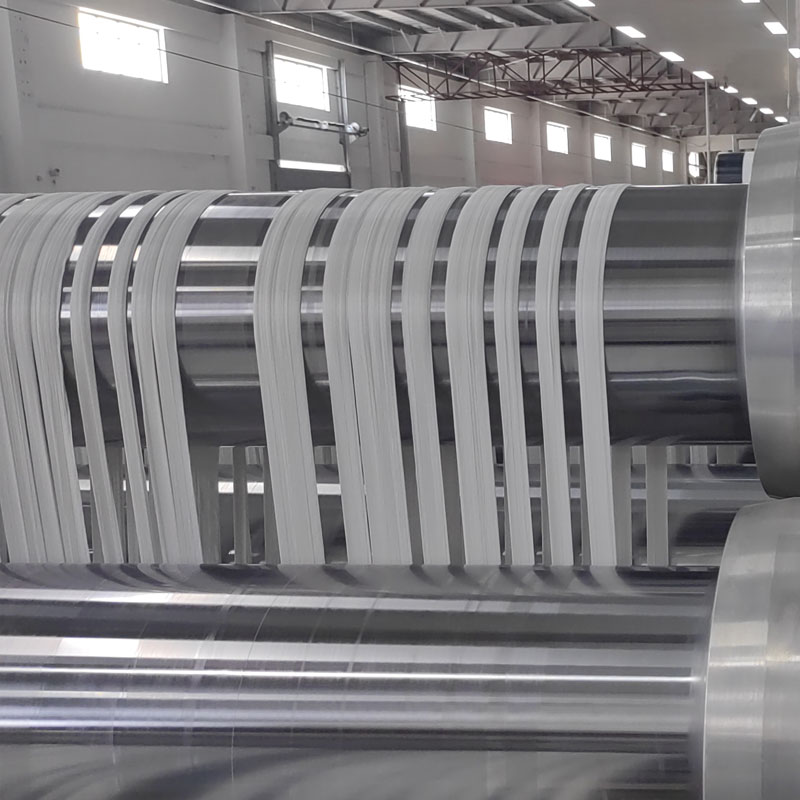
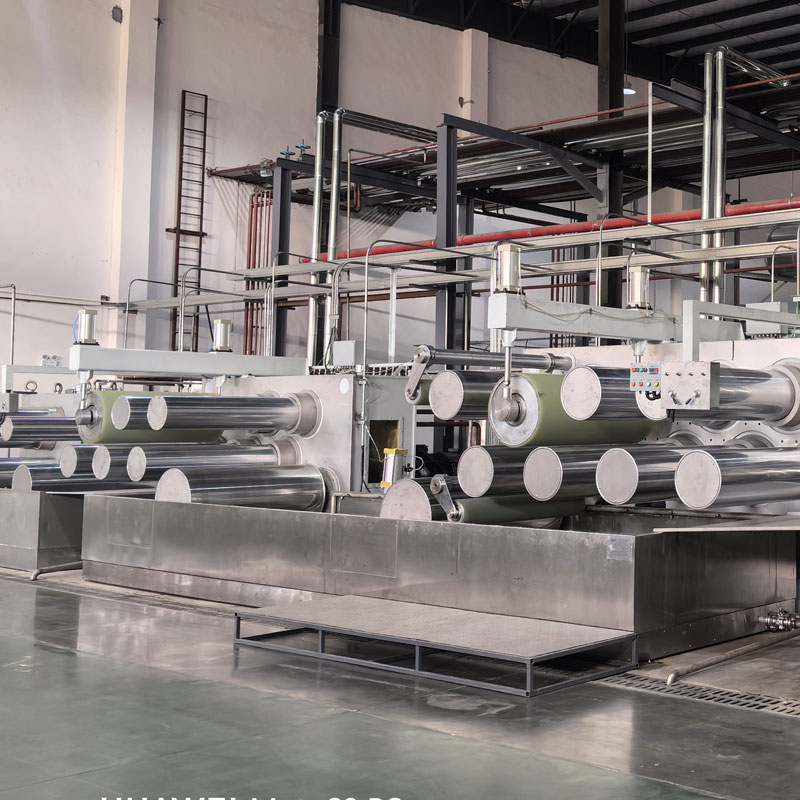
 A process view of PET melt spinning through tow preparation for staple fiber.
Drawing develops orientation before staple conversion
After initial formation, the filaments are assembled into tow and pass through drawing equipment. Differential roll speeds stretch the solidified filaments and develop molecular orientation. In practical terms, making polyester fiber is a linked sequence: melt and quench conditions affect the incoming tow, while drawing conditions influence the structure presented to later stages.
It is more useful to review the polyester fiber manufacturing process as connected interfaces than as a list of machines. A production team may monitor tow tension, roll temperatures, draw ratio, breaks, and uniformity, but the relevant acceptance criteria should come from the required fiber application. A stated capacity target does not by itself answer whether material preparation, utilities, controls, and quality inspection are ready to support it.
Crimping, heat treatment, cutting, and baling
What makes staple fiber different from a continuous filament package is the downstream conversion of tow into short, manageable fibers. Depending on the product design, the tow can be crimped to introduce bulk and cohesion, heat treated or stabilized as appropriate, cut to the specified staple length, opened, and formed into bales.
These fiber production steps deserve their own review. Crimp characteristics, cut-length consistency, moisture management, contamination control, and packaging condition can all matter to a downstream customer. Making polyester fiber therefore does not end when the tow leaves the drawing zone; the finished-fiber definition must be carried through handling, inspection, and dispatch preparation.
| Stage | Primary purpose | Useful verification question |
|---|---|---|
| Feedstock preparation | Provide suitable PET input for melting | What input-condition and drying evidence will be recorded? |
| Melt preparation and spinning | Deliver stable melt and form filaments | How are pressure, filtration, and spinning stability observed? |
| Quenching and drawing | Solidify and orient filaments | Which controls connect cooling, tow behavior, and draw consistency? |
| Staple finishing | Create the required crimped, cut fiber form | How will cut length, crimp, cleanliness, and bale condition be checked? |
Quality checks should follow the intended application
Making polyester fiber responsibly means defining how the finished material will be evaluated before the line is compared or commissioned. Typical checks may include dimensions, linear density, cut length, crimp characteristics, moisture, appearance, contamination, and other application-specific properties. The exact test plan should be confirmed against the product requirement and applicable methods.
This evidence-first approach is particularly important when recycled input is under consideration. Recycled PET can be a viable feedstock path, but its condition, sorting history, preparation route, and traceability questions should remain visible. It is more accurate to separate feedstock variability from equipment capability than to make broad claims about either one.
Where polyester fiber technology fits into project planning
Modern polyester fiber technology includes the equipment and controls that connect material flow, thermal treatment, mechanical handling, automation, and quality data. In a project discussion, it is often useful to map those interfaces before treating the core spinning equipment as the whole scope. The useful question is therefore not which option sounds more advanced, but which process package fits the stated fiber objective and site constraints.
For teams evaluating a new or updated line, a supplier discussion can be more productive when it begins with a concise requirement set: planned feedstock, fiber application, target output range, quality checks, utilities, automation expectations, layout boundaries, and commissioning evidence. Soft Gem’s stated whole-project and process-package context can support that kind of scoped planning discussion, subject to project-specific engineering confirmation.
A practical checklist for making polyester fiber
- Define the fiber application and measurable acceptance criteria before selecting process modules.
- Document the PET raw material route, preparation condition, and moisture-control approach.
- Review melt preparation, filtration, spinneret, quench, and take-up as connected stages.
- Link drawing, crimping, cutting, and baling choices to the required staple-fiber characteristics.
- Agree on the inspection plan, records, and engineering evidence needed before commissioning decisions.
Making polyester fiber is ultimately a controlled chain from input material to verified staple output. When teams trace that chain stage by stage, the polyester fiber manufacturing process becomes easier to scope, discuss, and validate without assuming that one setting or machine choice fits every product.


 Hot News