
 EN
How Does a PET Fiber Making Machine Improve Production Efficiency?
A pet fiber making machine can improve production efficiency when it is specified as part of a coordinated line rather than treated as a standalone purchase. In polyester fiber production, output depends on how material preparation, melting, filtration, spinning, drawing, cutting, and collection work together. A pet fiber making machine helps a plant create a more controlled route from PET feedstock to the intended fiber, but the operational result still depends on feedstock condition, utility readiness, operating practice, and the required fiber specification.
From an operations viewpoint, the useful question is not simply whether a the production line has a stated capacity. It is whether the full process can keep material moving predictably while maintaining the fiber characteristics that downstream users need. That distinction matters when evaluating PET fiber production technology, especially where recycled input quality can vary.
Efficiency starts with a connected production flow
A the production line supports efficiency by linking critical process stages in an intentional sequence. PET feedstock must be prepared for the selected process; the melt then needs consistent handling before it becomes filaments, and those filaments need controlled downstream treatment. If one stage repeatedly waits for another, line availability and usable output may suffer even when individual equipment units appear capable.
For this reason, an evaluation of a the production line should map the interfaces before focusing on a single headline specification. Review how feedstock arrives, how it is conditioned, where it is transferred, and how the line responds when material characteristics move outside the expected range. This is particularly relevant to polyester manufacturing equipment intended for projects that have different raw-material sources or product grades.
 A coordinated PET-to-fiber process requires attention to each material handoff.
1. Better input preparation reduces avoidable interruptions
Input readiness is one of the first places where a the production line can contribute to steadier production. PET feedstock condition affects the burden placed on later stages. Moisture, contamination, particle-size variation, and inconsistent handling are not merely material issues; they are process-planning inputs. A line designed around the actual feedstock condition gives the operating team a clearer basis for setting procedures and checking deviations.
That does not mean every project needs the same preparation scope. A the production line should be assessed against the feedstock available to the plant and the target fiber requirements. Separating capacity from readiness is useful here: nominal throughput does not by itself show whether upstream preparation, storage, or conveying can sustain the planned operating rhythm.
2. Process control helps stabilize filament formation
During melt processing and spinning, a the production line provides the process path in which temperature, material flow, filtration, and spinning conditions can be managed as linked variables. Stable filament formation matters because downstream drawing and cutting cannot fully compensate for inconsistency introduced earlier in the route. When teams review fiber machine performance, they should ask which controls are available, what conditions they monitor, and how adjustments are documented.
A practical review also looks at access for cleaning, inspection, and changeovers. A the production line that fits the plant’s maintenance approach may help reduce time spent resolving routine process issues. The relevant outcome is not an unverified promise of a fixed gain; it is a production setup in which potential sources of variation are visible and can be addressed in a repeatable way.
3. Drawing and finishing turn throughput into usable fiber
A pet fiber making machine contributes to useful production only when the line converts moving material into fiber that meets the agreed application needs. Drawing, crimping where applicable, heat treatment, cutting, baling, and collection should therefore be considered with the upstream stages. If the target calls for a particular fineness, length, feel, or processing behavior, the production concept should connect that target to the relevant operating windows.
This is why a the production line is often evaluated as an industrial fiber solution, not just as a collection of components. The plant needs a consistent handoff between stages and a way to confirm whether fiber quality is holding during normal operation. Quality checks should be selected for the intended fiber and confirmed during engineering discussions rather than assumed from a generic equipment description.
4. Automation and information flow can support faster decisions
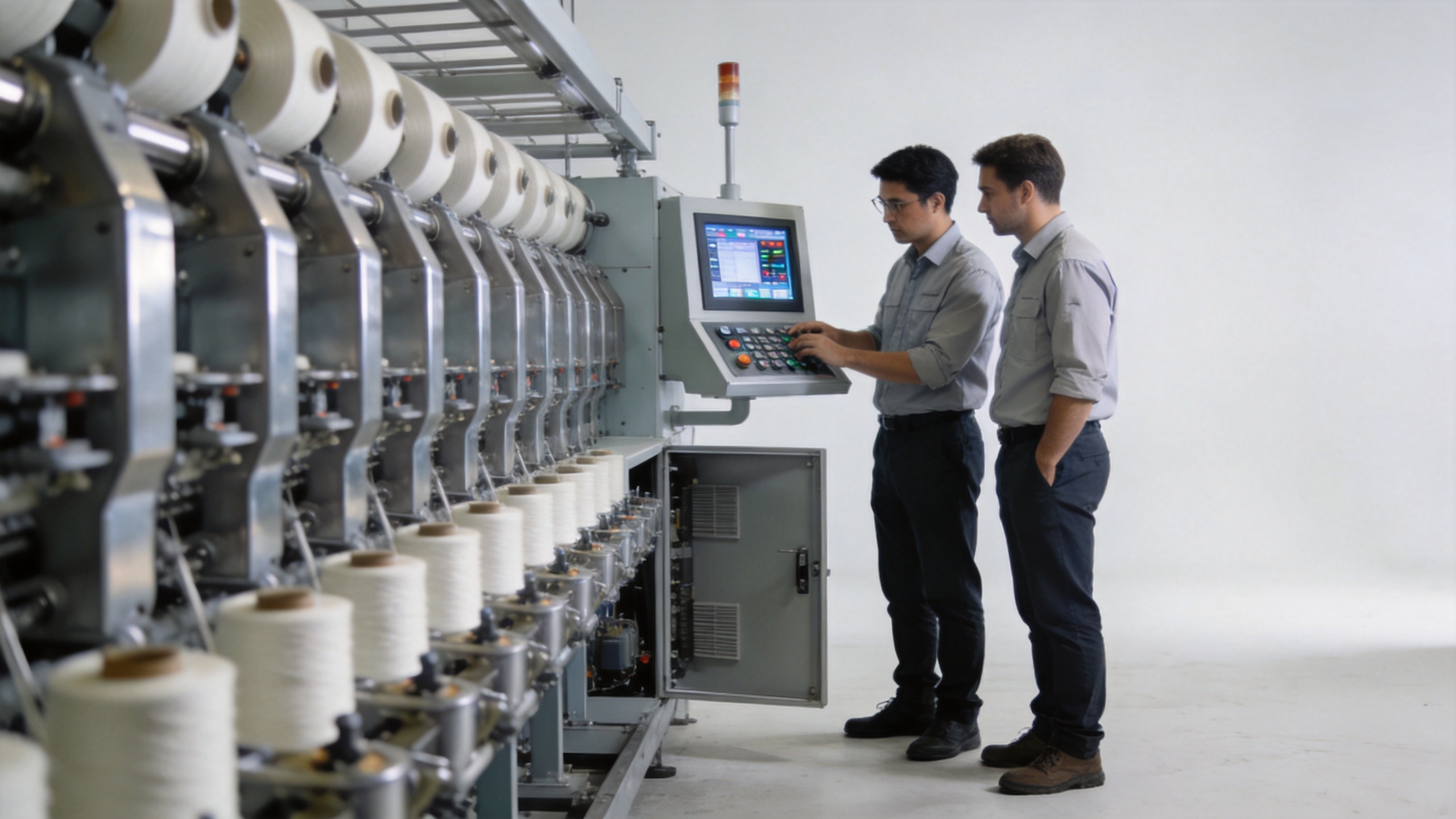
Where appropriate, a the production line can make operating information easier to review by bringing process signals into a usable control and reporting workflow. The value is not the presence of automation alone. It is the ability of operators and maintenance teams to see a developing deviation, investigate the related stage, and record the response. For a the production line, that may involve tracking material movement, process conditions, alarms, or batch-related observations according to the line design.
For buyers comparing polyester manufacturing equipment, it is useful to ask how controls connect to daily operating routines. Clarify the responsibilities for setpoint management, alarm response, maintenance records, and production reporting. This makes fiber machine performance a decision topic tied to actual work practices rather than a feature checklist.
5. Maintenance access protects operating continuity
A the production line also affects efficiency through maintainability. Filtration elements, guides, rolls, heating zones, cutters, and conveying points need an approach for inspection and service that matches the operating plan. Before selecting a pet fiber making machine, review expected maintenance activities, access requirements, spare-parts planning, safety procedures, and the skills available on site.
Planned maintenance does not remove every interruption, but it gives the plant a structured way to manage known wear and inspection points. This is a more realistic basis for improving operating continuity than treating a the production line as independent from the people and procedures around it.
A decision checklist for a PET fiber project
- Define the feedstock source, condition, and expected variation before finalizing the the production line scope.
- Document the target fiber attributes and the checks used to evaluate them.
- Review each handoff from preparation through finishing for capacity, control, and material-transfer fit.
- Ask how the proposed PET fiber production technology handles changeovers, cleaning, inspection, and abnormal conditions.
- Confirm utility interfaces, layout constraints, operator responsibilities, and service planning for the the production line.
Conclusion
A the production line can improve production efficiency by giving a fiber plant a structured, controllable process route. The strongest results come from aligning the equipment scope with feedstock readiness, target fiber requirements, downstream interfaces, and operating discipline. Rather than judging a pet fiber making machine by capacity alone, project teams can use this systems view to define the questions that matter before engineering and procurement decisions are finalized.



 Hot News

