
 EN
PET Fiber Production Technology for Sustainable Manufacturing
A pet fiber machine is often discussed as if it were a single asset. In a production project, evaluate the pet fiber machine as part of a connected system: incoming material, preparation, melt handling, spinning, fiber finishing, controls, utilities, and verification all influence the result. This systems view is particularly important when the target is recycled PET fiber and the business objective includes sustainable production.
From a plant-engineering perspective, the first question is not which pet fiber machine has the longest feature list. It is whether the process package fits the available feedstock and the intended polyester manufacturing route. A line planned around stable virgin resin may need different preparation and control decisions from one designed around recycled flakes with changing color, contamination, or moisture conditions.
Start with the fiber specification, not the equipment list
Before comparing a pet fiber machine, define the fiber application, denier range, cut length, crimp requirement, color approach, and downstream use. These targets turn a broad equipment request into a set of process questions. They also help engineering, production, quality, and procurement teams use the same acceptance language.
The useful shift is to treat recycled PET fiber feedstock as a design input, not a background assumption. Bottle flakes, post-industrial material, and prepared recycled feedstocks can differ in particle condition, contamination risk, moisture history, and consistency. A pet fiber machine selection should therefore include an incoming-material review, sampling plan, and agreed limits for the feedstock that the line is expected to process.
Map the process stages around a pet fiber machine
Mechanical PET recycling is commonly described through collection or receipt, sorting, washing, drying, melting, and extrusion before material is used again. A fiber line adds further interfaces for melt conditioning, spinning, drawing, crimping, heat setting where applicable, cutting, baling, and inspection. The exact sequence varies by product and project scope, but the dependency between stages does not disappear.
Material preparation and drying
For a pet fiber machine, preparation is not merely an upstream housekeeping task. Moisture and residual contamination can affect how the material behaves during melt processing. Search evidence for PET laboratory handling includes a drying condition stated for a particular laboratory practice; it should not be copied into a plant specification. Instead, use it as a reminder to establish feedstock-specific drying criteria through engineering review and trial evidence.
Melt handling and filtration
The melt section of a pet fiber machine should be assessed with the intended feedstock, throughput range, filtration approach, pressure behavior, and cleaning strategy in mind. Changes in incoming material can change the demand on melt conditioning. A larger extruder or longer filter sequence is not automatically the appropriate answer. The relevant question is whether the arrangement supports the defined fiber target and the plant’s operating controls.
Spinning, drawing, and finishing
After melt preparation, the pet fiber machine must translate polymer flow into a stable fiber process. Spinneret selection, quench conditions, drawing, crimping, cutting, and handling should be reviewed as a chain rather than as isolated modules. If the fiber specification changes, the evaluation should revisit this chain instead of assuming that one adjustment will resolve every downstream effect.
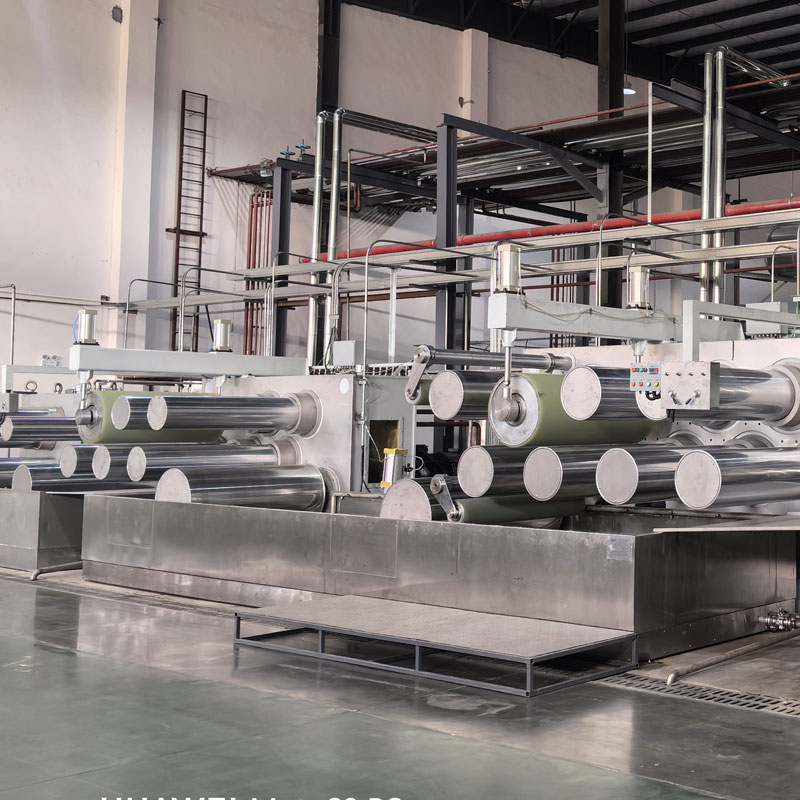 Process interfaces should be reviewed as one connected fiber-production system.
Use automation to make decisions visible
A pet fiber machine may include controls and data collection, but sustainable production depends on how teams use that information. A practical control plan can identify which values are observed at material receipt, drying, extrusion, spinning, and final inspection; who reviews deviations; and what evidence is retained. This creates a clearer link between operating conditions and finished-fiber evaluation.
Capacity alone does not answer whether a pet fiber machine is ready to support a project. Utilities, material handling, maintenance access, spare-parts planning, operator training, and commissioning interfaces need the same attention. Mapping these items early can reduce ambiguity between the equipment scope and the site responsibilities.
Make sustainability claims evidence-led
Recycled PET fiber can support a circular-material objective, yet a pet fiber machine by itself does not establish a recycled-content claim or an environmental outcome. Those statements need defined material records, appropriate traceability, and a verification method suited to the buyer’s market and product. Independent recycled-material verification services are available, but each project should determine the documents and testing that apply before publication or customer communication.
Green technology in polyester manufacturing is therefore a process-management topic as well as an equipment topic. Teams can examine material yield, reject handling, energy monitoring, water use where washing is in scope, and the destination of process residues. The practical output is a measurable improvement plan rather than a broad label attached to a pet fiber machine.
A practical review checklist
- State the recycled PET fiber source, condition range, sampling method, and material records.
- Define the target fiber specification and the tests used to evaluate it.
- Map preparation, drying, melt handling, spinning, drawing, crimping, cutting, and packing interfaces.
- Review the pet fiber machine together with utilities, controls, site layout, maintenance access, and commissioning responsibilities.
- Set acceptance criteria for trial material before finalizing operating windows.
- Document how sustainable production indicators and recycled-content statements will be checked.
Turning a machine inquiry into an engineering brief
For teams considering a pet fiber machine, a concise engineering brief is more useful than a generic request for price. It should describe the feedstock, intended fiber, annual operating assumptions, available utilities, factory constraints, quality checks, and evidence needed for recycled-content communication. Soft Gem’s stated whole-project planning context can be discussed as a project-specific scope review, including material flow, process-package questions, engineering design interfaces, equipment manufacturing, digital integration, and lifecycle service needs.
In short, sustainable polyester manufacturing starts with a production objective and a validation plan. When feedstock, process interfaces, operating data, and finished-fiber checks are aligned, the pet fiber machine can be evaluated as the production-system component it is—not as an isolated answer to a complex recycled-fiber project.



 Hot News

