
 EN
Biodegradable Fiber Applications in Modern Textile Industry
In textile manufacturing, biodegradable fiber is not a single material category or an automatic environmental benefit. It is a design question that links feedstock, yarn and fabric performance, dyeing and finishing, product life, collection, and the conditions available at end of life. For mills and brands considering sustainable textiles, the useful starting point is the intended application rather than a broad materials claim.
From a fiber-process technical advisory perspective, a biodegradable fiber program should begin with the target specification and process compatibility. A soft apparel knit, a disposable hygiene nonwoven, and an agricultural textile can ask very different things of a material. The same is true for environmental fiber claims: they require evidence about the material, the article construction, and the disposal route.
Why application comes before a biodegradable claim
Global fiber production reached 132 million tonnes in 2024, according to Textile Exchange, while polyester accounted for 59% of total output. That scale helps explain why biodegradable materials are receiving attention, but it does not make every application suitable for a biodegradable fiber. A technical textile may need wet strength, heat resistance, or a long service life that points to a different material decision.
At first, this looks like a material-selection issue; more precisely, it is a process-and-integration issue. A biodegradable fiber can be plant-derived, regenerated cellulosic, protein-based, or produced from a polymer designed for specified degradation conditions. Its behavior depends on chemistry, fiber geometry, additives, blends, dyes, finishes, and the environment after use. A design team should therefore define the service period and end-of-life scenario before treating biodegradability as a purchasing criterion.
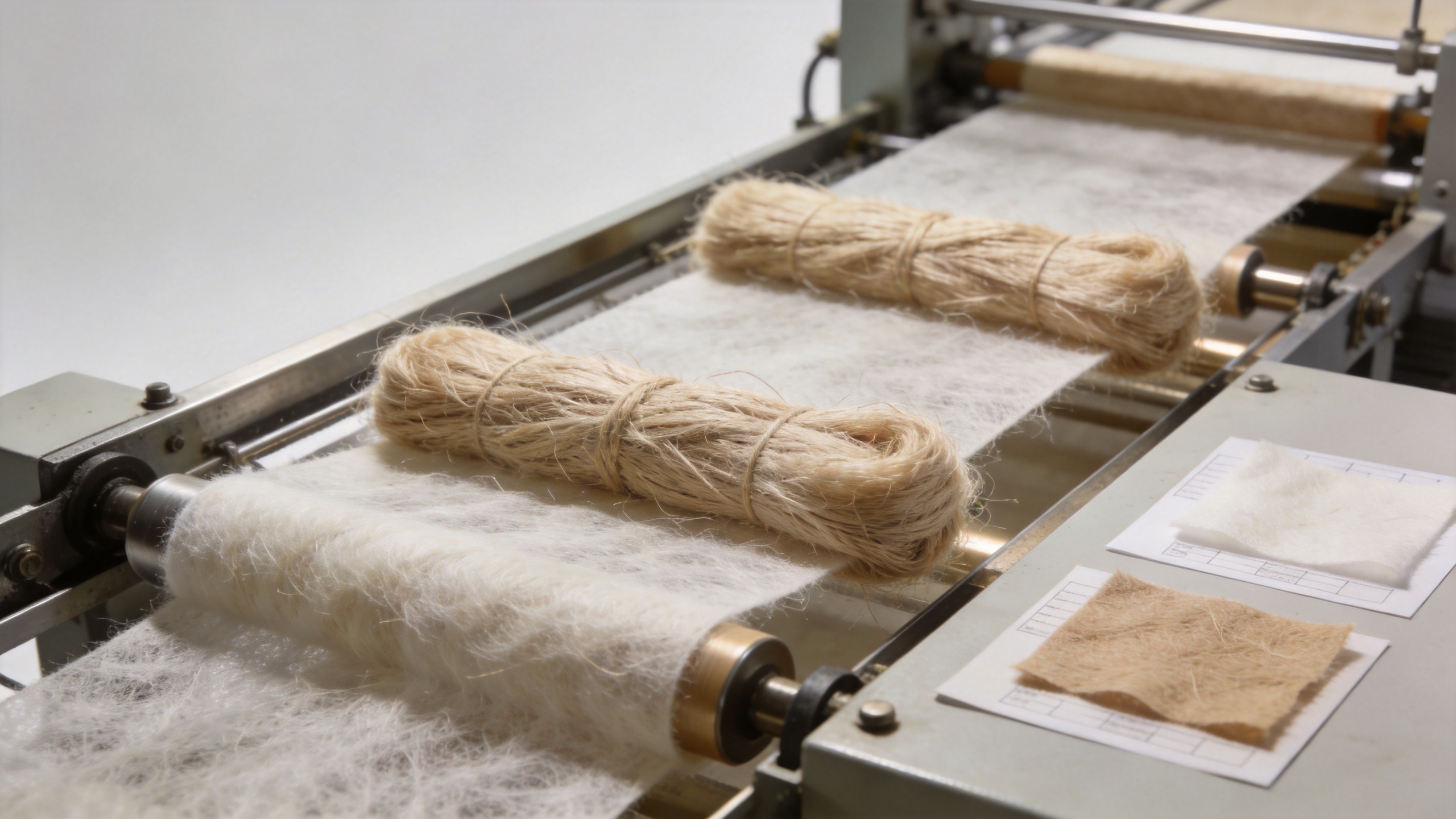
Where biodegradable fiber is being evaluated
Apparel and next-to-skin textiles
For apparel, a biodegradable fiber may be assessed for hand feel, moisture management, dye uptake, strength retention, pilling, and care requirements. Cellulosic options can be relevant where a brand wants biodegradable materials with familiar comfort characteristics. The decision still needs a fiber-to-garment view: sewing thread, elastane content, coatings, labels, and trims may change the outcome for a finished article. Sustainable textiles should be specified as a complete product system, not only as a base fiber.
Hygiene, wipes, and other short-use nonwovens
Short-use nonwovens are a practical area for biodegradable fiber evaluation because the service-life expectation differs from that of durable apparel. Here, engineers may compare softness, absorbency, web formation, bonding method, fluid handling, and the disposal pathway. A biodegradable fiber choice must also withstand converting and use; early degradation inside the supply chain would not serve the application. The question is not which option sounds greener, but whether the fiber, bonding approach, and disposal conditions align with the stated use.
Agriculture and controlled-use textile structures
Mulch fabrics, seedling supports, crop-cover elements, and certain erosion-control structures can create a different case for biodegradable materials. These applications may reduce the need to retrieve a material after a defined period, but they demand careful validation of weather exposure, soil contact, tensile retention, and residues. A biodegradable fiber may fit a controlled-use design only when the anticipated conditions are clear and the relevant evidence has been reviewed.
Home textiles, packaging textiles, and fill applications
In home textiles and packaging-related structures, a biodegradable fiber can be considered for fills, nonwoven layers, protective wraps, or articles designed for a shorter life. These uses often involve blends and finishing treatments, so the specification should separate the fiber claim from the final-product claim. For green products, the strongest communication is usually a precise statement of material composition, intended use, and supported disposal conditions rather than a broad end-of-life promise.
Process choices that shape the result
For a textile producer, biodegradable fiber selection reaches beyond polymer sourcing. Opening, blending, carding, spinning or web formation, drawing, crimping, heat setting, dyeing, and finishing may each affect performance. If the feedstock condition varies, the evaluation should include input-quality questions before drawing conclusions about fiber behavior. A capacity target, for example, does not by itself show whether temperature control, moisture management, handling, controls, and quality checks are ready to support a new fiber.
Instead of listing equipment features, ask which operating question each feature supports. Can the line manage the target staple length and fineness? Does the bonding or finishing route preserve the required product properties? Can the quality workflow distinguish lot variation before conversion? These questions turn a biodegradable fiber discussion into an actionable process review.
Biodegradability and compostability need stated conditions
A biodegradable fiber should not be described as disappearing in every environment. ISO 14855-2, for example, describes measurement of ultimate aerobic biodegradability under controlled composting conditions by analysis of evolved carbon dioxide. ASTM D6400 addresses labeling of plastics designed for aerobic composting in municipal or industrial facilities. These references illustrate a central point: test method and environment matter.
For sustainable textiles, technical teams should ask what claim is intended, what component is covered, which conditions apply, and what documentation supports the statement. Industrial composting, home composting, soil exposure, marine exposure, and landfill conditions are not interchangeable. A biodegradable fiber may perform differently across them, and a blended or coated article may require separate assessment. That boundary is not a weakness in a green products message; it is what makes the message credible.
A practical evaluation checklist
- Define the end use: Identify wear time, mechanical demands, care conditions, and the component that will contain biodegradable fiber.
- Set the target specification: Establish measurable requirements for strength, elongation, softness, absorbency, thermal behavior, appearance, and consistency.
- Map process interfaces: Review feedstock preparation, line settings, bonding or spinning route, finishing, inspection, and packaging.
- Review the full article: Record blends, coatings, dyes, adhesives, trims, and accessories that may affect an end-of-life statement.
- Request appropriate evidence: Match test reports and claims to the planned disposal environment instead of applying one result to every scenario.
- Plan communication carefully: Use language that distinguishes a biodegradable fiber ingredient from a verified finished-textile outcome.
Moving from material interest to a workable textile plan
Biodegradable fiber applications are most useful when they begin with a product objective and continue through process validation. That means balancing application performance with traceable material information and an evidence-based end-of-life pathway. The modern textile industry does not need a universal answer; it needs well-scoped sustainable textiles that are designed, produced, tested, and described for their actual conditions of use.
For projects that need to translate an environmental fiber concept into manufacturing questions, Soft Gem can support an early discussion around process packages, engineering interfaces, and lifecycle service considerations. The appropriate line scope and validation plan remain project-specific and should be confirmed against the target fiber and finished application.



 Hot News

