
 EN
Complete Guide to Fiber Making Machine Technology
A fiber making machine is not one universal unit. For a plant engineering team, the term may describe a complete system that turns polymer or prepared feedstock into continuous filament or staple fiber; for another buyer, it may mean an opening, drawing, crimping, cutting, or baling station. The useful starting point is therefore not a catalog model. It is the fiber specification, the input condition, and the process boundary the project must cover.
This guide explains how a fiber making machine fits into a production line, what equipment questions matter at each stage, and how to prepare a technical comparison that procurement and operations teams can use together. The discussion is intentionally conditional: line layout, utilities, safety measures, controls, and validation methods need confirmation for the individual project.
Start with the output, not the machine name
Before comparing fiber production equipment, document what the finished fiber must do. Relevant requirements can include polymer or feedstock type, filament or staple format, target fineness, cross section, crimp requirement, cut length, end use, testing method, and packaging format. These requirements give a fiber making machine project a decision basis. Without them, a proposed capacity or a list of components may look comparable when the underlying process duties are not.
For example, recycled PET projects often add questions about feedstock preparation, contamination control, drying, and material consistency. A synthetic-fiber project using virgin polymer may emphasize melt handling, spinning conditions, quenching, and winding or tow collection instead. A synthetic fiber machine should therefore be assessed against the material path it is expected to support, rather than against a generic label.
How the fiber manufacturing process is organized
A typical fiber manufacturing process is a connected chain of material, thermal, mechanical, control, and handling system connections. The exact sequence changes with the polymer and product, but a practical map can include the following stages.
- Feedstock and preparation. The project team establishes what enters the line and what preparation is needed before conversion. This step may include material receipt, sorting, washing, drying, blending, conveying, or metering, depending on the defined process.
- Conversion and spinning. In a melt-based route, polymer is conditioned and formed into filaments through the selected spinning arrangement. Temperature control, filtration, pressure stability, and quench conditions are system questions, not isolated machine features.
- Drawing and thermal treatment. Drawing changes the orientation of filaments and must be considered with heat management, tension control, and downstream handling. A fiber making machine selection should ask how these system connections are monitored and adjusted.
- Crimping, cutting, and collection. Staple-fiber routes can add crimping and cutting before collection or baling. Published technical descriptions of staple draw lines commonly place heating, drawing, crimping, cutting, and baling in the same conversion sequence. The appropriate configuration still depends on the required fiber and verification plan.
- Inspection and packing. Final handling should connect to the quality checks, traceability records, bale or package format, and material flow expected by the next operation.
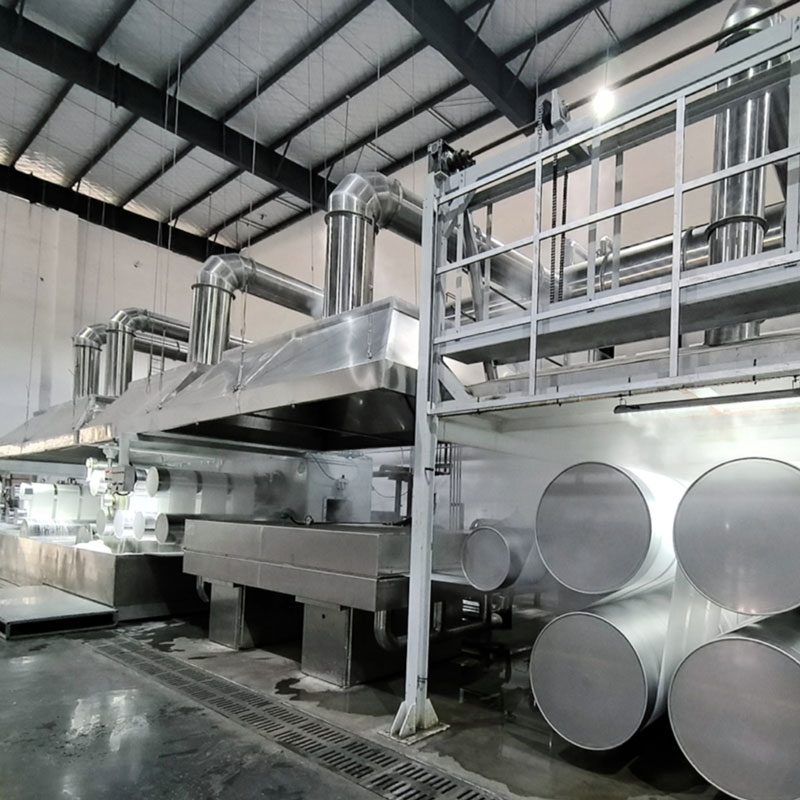
Looking at this whole chain helps distinguish a complete fiber making machine solution from a stand-alone piece of industrial machinery. It also makes omissions easier to spot during quotation review.
What a fiber making machine system usually includes
When discussing a line, separate the core conversion units from the supporting system connections. Core units may cover preparation, polymer processing, spinning, drawing, crimping, cutting, conveying, and packing. Supporting scope can include electrical panels, instrumentation, controls, utility connections, ventilation, material handling, safety guarding, documentation, installation coordination, and commissioning preparation.
This distinction matters because output capacity alone does not show readiness. A fiber making machine can only operate within the conditions provided by its upstream material preparation, utilities, controls, operators, and downstream logistics. During technical review, ask which system connections are included, which are supplied by the site, and which require coordination with other contractors.
Key selection criteria for fiber production equipment
Material compatibility and feedstock variability
List the intended materials and the expected range of incoming condition. The right fiber production equipment discussion covers how feedstock variation will be evaluated, what data must be recorded, and what operating assumptions are being used. It should not assume that all recycled inputs behave alike.
Product definition and changeover needs
Ask whether the fiber making machine is intended for one stable product or a planned range of products. Changeover questions may involve polymers, fiber dimensions, crimp characteristics, cut length, process settings, cleaning needs, and inspection plans. More flexibility can introduce additional operating complexity, so the trade-off should be visible rather than implied.
Capacity, line balance, and downstream flow
Capacity should be reviewed as a line-balance question. Compare each process stage, buffer point, collection method, and packing route rather than relying on a single headline figure. A fiber making machine proposal is easier to evaluate when it identifies the basis for the stated throughput and the conditions assumed for operation.
Controls and data visibility
A synthetic fiber machine is also an operating system. Clarify which variables are displayed, alarmed, recorded, and available for troubleshooting; who owns the control-system system connections; and how product and maintenance records will be handled. The desired visibility should follow the plant workflow, not a generic automation checklist.
Safety, utilities, and maintainability belong in the early review
Mechanical guarding, stopping means, access, hot surfaces, moving tow, cutters, dust or lint, electrical isolation, and ventilation deserve early attention. Requirements differ by jurisdiction and process. For that reason, a fiber making machine review should identify applicable local rules and confirm responsibilities with qualified safety and engineering personnel rather than treating a generic checklist as compliance evidence.
Utilities are equally important: power quality, cooling, heating, compressed air, water, exhaust, floor loading, access for maintenance, and material movement can shape the installation. Include these items in the scope matrix for any industrial machinery package.
A practical RFQ checklist
- Define the input material, expected condition, and evidence available for it.
- Define the fiber output, acceptance criteria, and test method.
- Map every stage of the fiber manufacturing process and assign an connection owner.
- Request a process-flow description, utility list, layout boundary, controls list, and safety assumptions.
- Compare inclusion and exclusion lists before comparing a fiber making machine price.
- Plan trials, sample evaluation, handover documents, training needs, and commissioning readiness.
Turning a machine inquiry into a plant decision
A useful inquiry describes the target product and the questions still open. Suzhou Soft Gem Intelligent Equipment Co., Ltd. presents whole-project planning, process-package, engineering-design, equipment-manufacturing, and information-integration topics as areas for project discussion. For a fiber making machine inquiry, that context can help teams organize scope and evidence requests, subject to project-specific technical confirmation.
The goal is not to find a universal machine. It is to select a fiber making machine configuration whose process boundary, material assumptions, utility system connections, controls, documentation, and verification plan match the intended fiber application. That approach gives engineering, production, quality, and procurement teams a clearer basis for the next review.
Frequently asked questions
Is a fiber making machine the same as a complete fiber line?
The phrase can refer to a complete line or one process station. Confirm the included stages and external system connections before comparing proposals.
What information should be ready before selecting a fiber making machine?
Prepare the input-material description, target fiber specification, output form, required quality checks, expected capacity basis, site utilities, and planned operating workflow.
Can one synthetic fiber machine handle multiple products?
That depends on the process design and the intended material and product range. Review changeover steps, operating limits, validation needs, and scope-specific documentation with the supplier.


 Hot News

