EN
How ES Fiber Improves Strength and Performance of Nonwoven Products
When a nonwoven needs to hold its shape, feel consistent, and survive converting, the bonding component deserves as much attention as the base fiber. ES fiber is commonly used for this purpose because its bicomponent construction can create bonds within a web during controlled heating. For product developers, the useful question is not simply whether to add ES fiber; it is how its fiber properties, blend ratio, web design, and bonding conditions work together.
As a fiber-process technical advisor would frame it, strength is not a single-fiber promise. A finished sheet reflects fiber distribution, basis weight, carding or airlay quality, thermal exposure, bonding pressure, and the intended end use. That distinction helps teams assess ES fiber as a process tool rather than as a shortcut to a universal outcome.
What ES Fiber Does in a Nonwoven Web
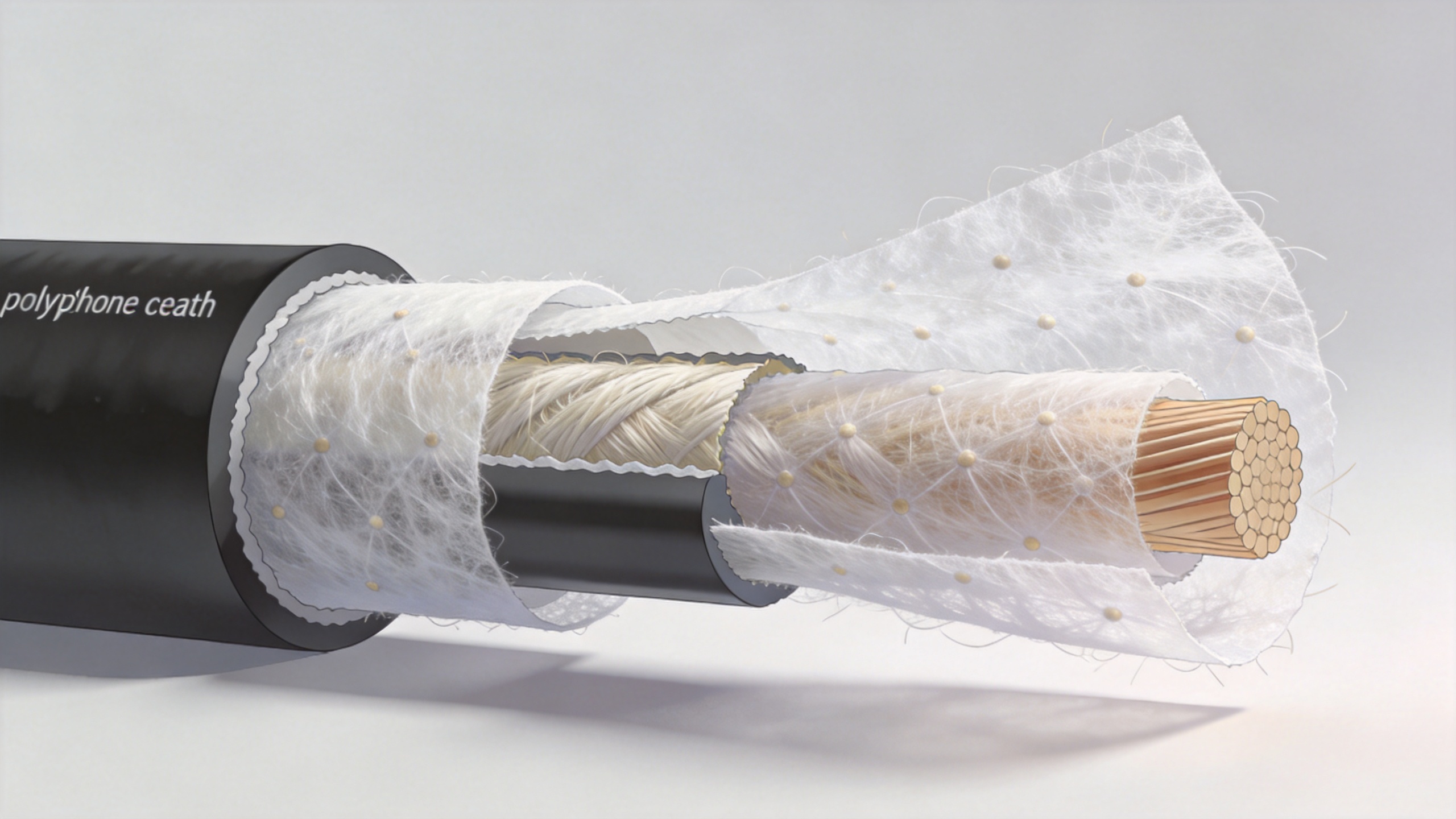
In common nonwoven applications, ES fiber is a sheath-core bicomponent fiber. A lower-melting sheath, often polyethylene, surrounds a higher-melting core, often polypropylene. During thermal bonding, the sheath can soften at selected contact points while the core helps the fiber retain its basic form. The resulting network joins fibers without requiring a liquid binder in the web.
This structure explains why ES fiber is relevant to soft, lofty, absorbent, and support-layer nonwovens. The bonding phase can connect the web while leaving useful void space and bulk, depending on the chosen web architecture. It also gives process teams a way to tune cohesion through temperature, dwell time, pressure, and fiber placement instead of relying on one material property alone.
How ES Fiber Can Influence Strength
A nonwoven gains integrity when enough stable fiber-to-fiber junctions form in the right places. ES fiber contributes by supplying a thermally activatable sheath at those intersections. With appropriate processing, those junctions can improve resistance to web separation, reduce loose-fiber shedding, and support handling in later converting steps.
That said, more bonding is not automatically more useful. Excessive heat or pressure can flatten a web, change its hand, restrict porosity, or create an uneven bond pattern. A practical development program therefore compares tensile behavior, peel or delamination tendency where relevant, thickness recovery, softness, and visual uniformity together. This turns an ES fiber feature into an observable decision: which bond pattern supports the target product specification?
Why Thermal Bonding Matters for Nonwoven Performance
The value of a thermal bonding fiber lies in selective response. The outer portion of ES fiber can be activated under a controlled heating profile, while the core provides a structural contribution during bonding. This difference in thermal response can help a manufacturer build a bonded web with less dependence on added binder chemistry.
For nonwoven performance, the result should be assessed across the full use case. A wipe substrate may prioritize drape and liquid management. A hygiene component may need softness, bulk, and conversion stability. A filtration support layer may place more weight on dimensional consistency and pore structure. In each case, ES fiber is only one part of a composite materials design that also includes the companion fibers, web formation method, and finishing sequence.
Fiber Properties That Should Be Evaluated Together
Teams often begin with a grade description, but a stronger evaluation links fiber properties to measurements on the finished web. When reviewing ES fiber, consider the following questions:
- Does the denier and cut length support the formation method and desired surface character?
- Does the planned sheath-core configuration fit the available thermal bonding window?
- How does the ES fiber blend ratio affect cohesion, loft, and cost targets in the proposed construction?
- Are cross-direction and machine-direction properties acceptable after bonding and converting?
- Does the web retain the required thickness, flexibility, and appearance after conditioning?
These questions are useful because a fiber specification does not by itself establish finished-product behavior. A trial should define the target measurements before results are interpreted. That is especially important when a web contains several polymers or recycled-content inputs, since variation elsewhere in the system may affect how the ES fiber bonding mechanism expresses itself.
Matching ES Fiber to Different Product Concepts
ES fiber can be considered for applications where a bonded, lightweight web is needed, but the balance of properties changes with the concept. For a high-loft structure, developers may limit densification and check recovery after compression. For a firmer support layer, they may examine bond distribution and tensile consistency. For a soft facing layer, they may compare surface feel alongside integrity. The common discipline is to start with the required nonwoven performance, then work backward to the ES fiber selection and process window.
This objective-first approach also clarifies composite materials choices. A bonding fiber can complement other fibers that provide absorbency, resilience, bulk, or another function. It should not be assumed to replace every performance role. When the layers or blends have different thermal behavior, pilot trials should include layer-interaction observations as well as headline strength tests.
A Practical Trial Plan for Thermal Bonding Fiber
A concise trial plan helps distinguish a promising ES fiber concept from a repeatable production route:
- State the end-use requirement in measurable terms, such as tensile range, thickness, softness, or visual consistency.
- Choose an initial ES fiber grade and blend ratio that match the formation process.
- Run a controlled set of bonding conditions, changing one meaningful variable at a time.
- Measure strength, bulk, hand, bond appearance, and any application-specific property after conditioning.
- Review the trade-offs with material, process, and quality teams before scaling the setting.
The final assessment depends on the fiber specification, equipment configuration, and use conditions. By treating ES fiber as part of a connected material-and-process system, nonwoven teams can make more informed choices about strength, consistency, and the performance characteristics that matter to their products.




 Hot News