EN
Recycled Fiber Production Line: Equipment and Process Explained
A recycled fiber project is not defined by one machine. It is an integrated material-handling, conversion, and quality-control system whose layout must reflect the feedstock and the fiber specification. For teams evaluating a recycled fiber machine or a complete fiber production line, the practical question is not simply how material moves. It is how each stage protects the consistency needed by the next one.
This article takes a process-engineering view of recycled fiber production. It separates the two common routes—mechanical recovery of textile fibers and thermomechanical processing of recycled polyester—then maps the equipment, control points, and procurement questions that shape a workable line.
Start With the Recycled Fiber Route
“Recycled fiber” can describe outputs made through different routes, and that distinction changes the equipment list. Mechanical recycling typically receives textile waste, sorts it, removes unsuitable items, cuts or shreds it, and opens the material back toward a fibrous state. The output may move to nonwovens, filling, spinning preparation, or blending, depending on fiber length and end-use requirements.
For recycled polyester, the route often begins with selected PET flakes, chips, or prepared polyester feedstock. The material is dried, plasticized in an extruder, filtered as a melt, formed through spinnerets, cooled, drawn, and converted into staple fiber. This is the route most people mean when they discuss polyester recycling equipment for recycled staple fiber.
Keeping these routes separate during early planning prevents an avoidable mismatch: textile-opening equipment is built around fiber liberation, while a melt-spinning system depends on polymer condition, drying, filtration, and stable spinning conditions.
Core Equipment in a Recycled Fiber Production Line
1. Receiving, sorting, and feed preparation
Every line starts with what it can reliably accept. Receiving equipment may include bale opening, conveying, metal detection, manual or automated sorting stations, size reduction, washing where applicable, and storage for separated material lots. The point is not just throughput. The line needs a feedstock definition that describes polymer or fiber type, color, moisture, foreign matter, labels, trims, and batch variation.
Sorting matters because mixed composition and contamination can travel through the rest of the fiber production line as unstable processing or inconsistent output. In 2022, the European Environment Agency reported that the EU textile-waste capture rate was just under 15%; it also identified collection and treatment capacity as constraints. That context does not measure any individual plant, but it explains why incoming-material control deserves engineering attention.
2. Cleaning, drying, and dosing
For a recycled fiber machine using PET feedstock, cleaning and drying have different jobs. Cleaning reduces unwanted solids and residues. Drying manages moisture before thermal processing, since moisture can contribute to polymer degradation during melting. A dosing system then feeds a controlled material stream to the next stage. Operators should be able to trace a finished lot back to its incoming material lot, key preparation settings, and any blend ratio used.
For mechanically recovered textile fiber, preparation may emphasize removal of hard parts, controlled cutting, and material opening rather than melt preparation. The exact sequence should follow the material route instead of copying a generic equipment list.
3. Extrusion and melt filtration for recycled polyester
In a recycled polyester process, the extruder melts and conveys prepared polymer. Its role is paired with melt filtration: filtration captures residual solid contaminants before spinning. Filter selection, changeover practice, melt temperature, pressure trend, and residence time should be considered together. A filter that protects spinnerets may also add pressure behavior that the control system must monitor.
This is where polyester recycling equipment needs clear connection definitions. Ask which instruments record temperature, pressure, vacuum or venting conditions where used, and alarm history. A proposal should also identify the material path and the responsibilities at each connection point, rather than presenting extrusion as an isolated machine.
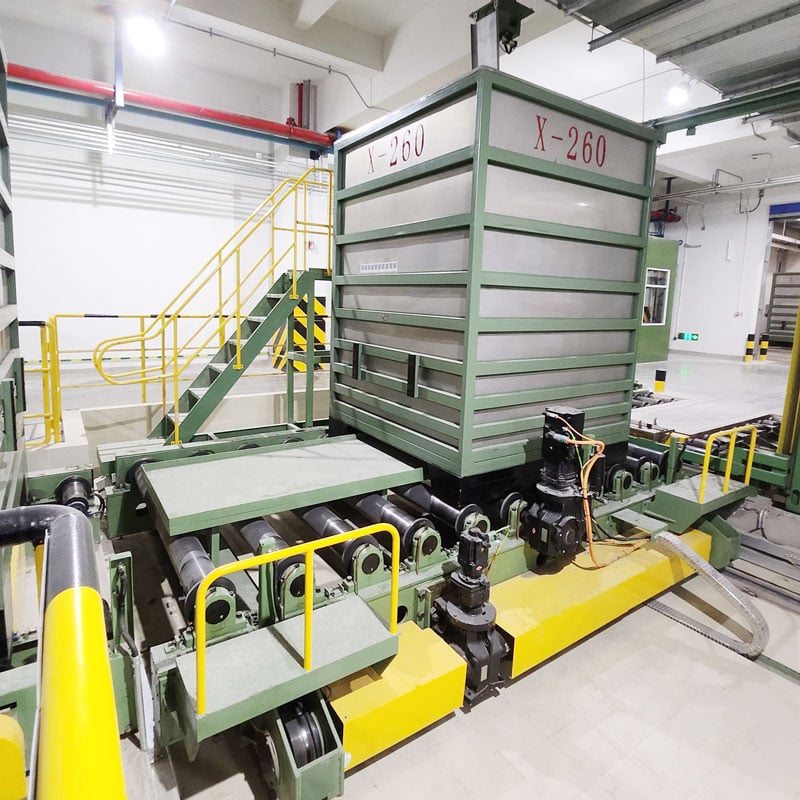
 A process view of how material preparation and fiber-forming stages connect in a recycled fiber line.
4. Spinning, quenching, and drawing
At the spinning stage, filtered melt passes through spinnerets to form filaments. Cooling or quenching solidifies the filaments, and downstream drawing aligns polymer chains to develop the intended fiber properties. The settings are interdependent: a change in feedstock behavior can show up as spinning instability, uneven filaments, or different draw response.
For that reason, a recycled fiber production line should include a sampling plan across the process—not only a final inspection. Operators may review melt pressure patterns, filament appearance, draw conditions, and lot-to-lot fiber measurements. The relevant acceptance criteria depend on the intended application, such as filling, nonwoven production, yarn preparation, or another downstream conversion step.
5. Crimping, heat setting, cutting, and baling
Staple-fiber finishing typically includes crimping, thermal treatment, cutting, and packaging. Crimp contributes bulk and processability; cutting establishes staple length; and baling prepares material for storage and shipment. These are not merely end-of-line steps. Their settings should be linked to the downstream user’s handling and product requirements. A fiber specified for one nonwoven route may not use the same finishing window as a fiber prepared for a spinning route.
Where Recycling Technology Needs Control Loops
Effective recycling technology connects material information to process decisions. A line benefits from clear lot identification, trendable operating data, defined sampling points, and a procedure for handling off-spec material. These controls help a team distinguish a feedstock issue from a machine setting issue before both are blended into one problem.
Automation can support this work by recording recipes, interlocks, alarms, and batch data, but the useful level of automation depends on line scale and operating model. During specification, ask what information is captured automatically, what must be logged manually, how recipes are protected, and what data can be handed over with each production lot.
A Practical Equipment Review Checklist
- Feedstock boundary: What materials, moisture range, contamination level, and blend variation does the proposal assume?
- Process scope: Which preparation, conversion, finishing, utilities, and waste-handling stages are included or excluded?
- Quality plan: Where are samples taken, which tests are defined, and how are nonconforming lots isolated?
- Site connections: How do conveying, power, water, air, ventilation, controls, and building services connect to the line?
- Validation: What trial material, acceptance criteria, documentation, and operator training should be agreed before handover?
Choosing a Line Around the Product, Not the Label
A recycled fiber project becomes easier to evaluate when the target fiber is defined before the equipment is selected. Start with the downstream application and work backward through fiber dimensions, lot consistency, feedstock quality, processing route, and utility needs. Then ask suppliers to explain the boundary conditions behind their proposed capacity and configuration.
For buyers comparing a recycled fiber machine, the useful outcome is a documented process package: what enters the line, how it is prepared and converted, which measurements govern release, and which handover boundaries remain the plant owner’s responsibility. That approach makes recycling technology a measurable production system rather than a broad sustainability label.


 Hot News