EN
Future Development Trends of Recycled Fiber Technology
Recycled fiber is moving from a narrow sourcing topic to a plant-level engineering question. For teams planning polyester staple fiber or related materials, the next stage is not simply adding more recycled fiber to a product description. It is building a process that can recognize input variation, keep material information connected to physical flow, and evaluate output against a stated fiber target.
From a recycling-process perspective, recycled fiber development starts with a practical boundary: feedstock condition and equipment capability are connected, but they are not the same thing. A line may be well configured and still require different preparation, control, or verification decisions when incoming material changes. That distinction will shape the sustainable fiber industry over the next several years.
Why recycled fiber technology is becoming a system question
Demand for circular manufacturing is increasing attention on what happens before material reaches the spinning or forming stage. Collection, identification, sorting, cleaning, and preparation influence the consistency of the stream presented to downstream equipment. The European Environment Agency notes that EU Member States must establish separate collection systems for used textiles from 2025 under the Waste Framework Directive. That is a policy signal, not a guarantee of uniform feedstock, but it points to a larger need for capable sorting and recovery systems.
For recycled fiber producers, this creates a useful shift in planning. Instead of treating incoming recycled material as a background assumption, teams can define the expected input range and ask how it will be checked. This is especially relevant where color, moisture, contaminants, polymer history, or blend composition may vary. Recycled fiber technology becomes more resilient when material preparation, conversion settings, quality checks, and records are reviewed as one connected chain.
That does not mean one technology route is right for every project. Mechanical and chemical recycling can address different material conditions and project objectives. A U.S. Government Accountability Office technology spotlight identifies infrastructure constraints and blended textiles as continuing challenges, while also noting that mechanical processing can reduce fiber quality for some uses. The practical implication is to match a recycled fiber route to the stated feedstock and target application rather than to an abstract label of innovation.
Trend 1: Better feedstock intelligence before conversion
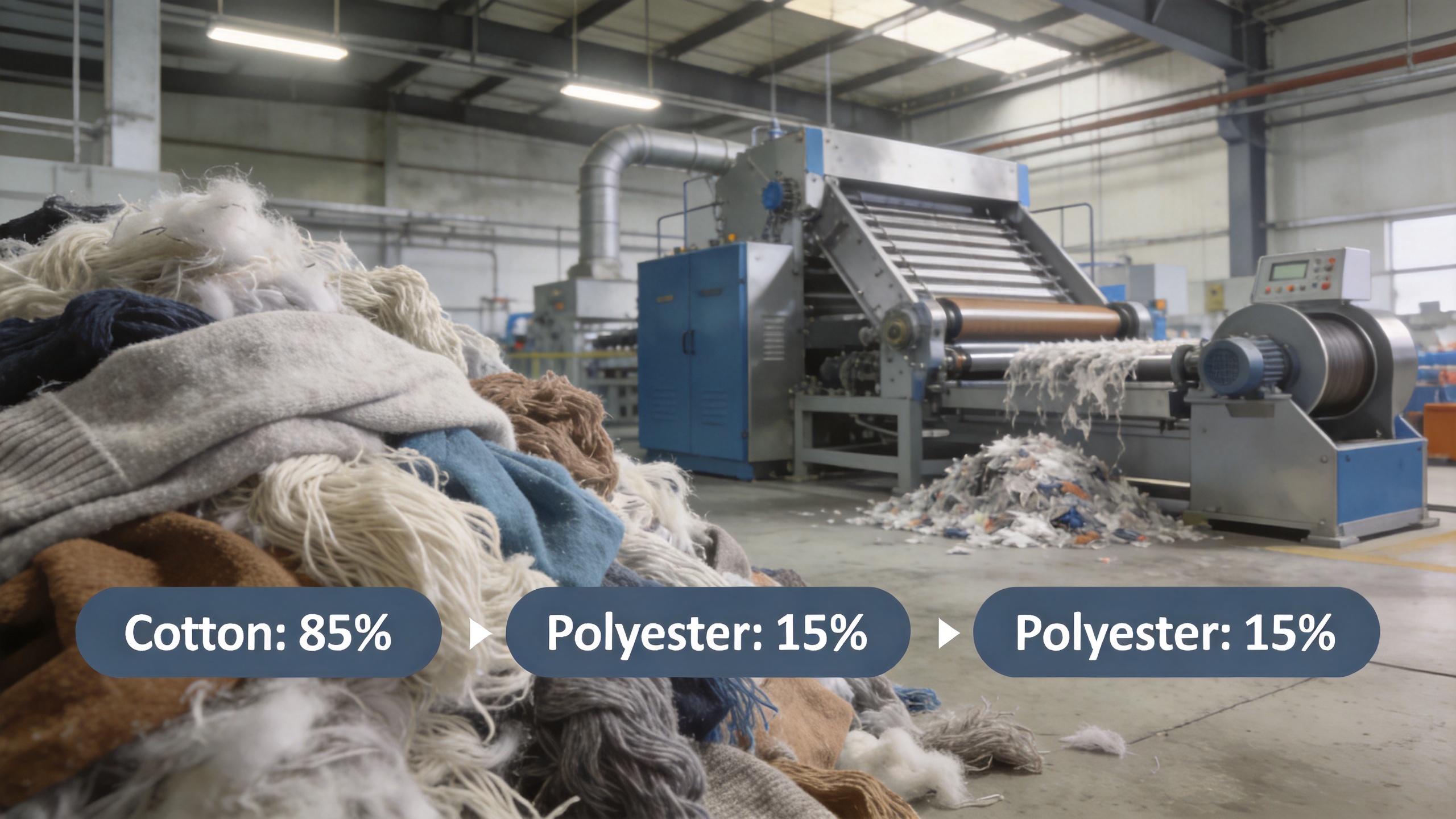
The first major trend is more disciplined feedstock characterization. A recycled fiber program needs more than a purchase specification; it needs an operating picture of what arrives and how the line responds. This may include incoming-material checks, segregation rules, sampling plans, and a clear definition of which variations require adjustment or hold decisions.
For a recycled fiber line, this early intelligence can reduce avoidable uncertainty later in the process. If the material condition changes, teams should not automatically attribute every downstream change to a machine setting. They can first examine the input information available, the preparation steps applied, and the evidence needed to compare batches. That approach supports recycling innovation without claiming that every variable can be eliminated.
In practice, the question is simple: what material facts would an operator, process engineer, and quality team need to see before they interpret a change in recycled fiber output? Designing that information path early can be as important as selecting an individual unit.
Trend 2: Sorting and traceability will connect physical and digital flows
Traceability is likely to become more operational in recycled fiber supply chains. It is not only a documentation exercise after production. Material records, batch identities, receiving data, and production observations can help a team understand what entered a process and what evidence supports a later claim. Textile Exchange describes traceability technology as a way to verify fiber origin and related claims through the supply chain, including recycled polyester as an applicable fiber category.
For circular manufacturing, the important point is not that every plant needs the same data platform. Rather, each project should define the handoffs that matter: receiving to sorting, sorting to preparation, preparation to conversion, and conversion to finished-fiber evaluation. By process interface, we mean the points where material, utilities, controls, data, or responsibilities connect. A record is most useful when it helps explain a real decision at one of those handoffs.
As green technology develops, buyers may ask more detailed questions about chain-of-custody evidence, material composition, and the boundary of a recycled-content statement. Teams can prepare by identifying which documents, tests, or engineering reviews would verify a claim before the claim is made. That is a stronger foundation for a sustainable fiber industry than broad sustainability wording.
Trend 3: Process flexibility will be judged by usable control
Future recycled fiber equipment discussions will likely focus less on long feature lists and more on whether a line gives teams usable visibility. Flexibility can be valuable when feedstock ranges or fiber targets change, but it also increases the need for disciplined recipes, control logic, sampling routines, and operating training. More options do not automatically create a better recycled fiber outcome.
For recycled fiber projects, process design should make the quality loop visible. At each relevant stage, teams can ask what is being observed, what action follows a deviation, and how the output is evaluated. This can include checking material preparation, melt or conversion conditions where applicable, drawing or finishing conditions, and final fiber characteristics against the agreed target. The exact checkpoints depend on the process package and site conditions.
Automation can support this work when it improves operating visibility and repeatable response. Still, a digital interface is not a substitute for clear responsibilities. A useful system defines which information an operator can act on, which trend needs engineering review, and which conclusion needs additional testing.
Trend 4: Validation will matter as much as technology selection
Recycling innovation is often described through the newest conversion method. The more durable trend may be validation discipline. Recycled fiber projects will need to distinguish between a promising trial, a repeatable operating window, and a production-scale conclusion. A pilot observation is not automatically a production result because feedstock, throughput, utilities, controls, and handling interfaces can change at scale.
Before committing to a recycled fiber configuration, it is useful to define the test purpose. Is the goal to compare input lots, assess a preparation route, establish a provisional process window, or evaluate a finished-fiber requirement? Once the question is clear, the trial can record the relevant variables and limitations. This turns circular manufacturing from a general ambition into an engineering learning path.
There is also a commercial benefit to this evidence-first approach: it helps procurement and operations teams compare scope on shared boundaries. A lower initial quote or a more advanced-sounding technology may not resolve questions about integration, commissioning, training, documentation, or lifecycle support. Those questions are particularly important when recycled fiber feedstock is expected to vary.
How to prepare for the next phase of recycled fiber development
For manufacturers and project teams, the next step is not to predict a single winning technology. It is to build a decision checklist that keeps the material and process boundaries visible:
- Define the expected recycled fiber feedstock range and the information available at receiving.
- Map how sorting, preparation, conversion, and quality evaluation exchange material and data.
- Set trial objectives before using results to support a scale-up or product conclusion.
- Ask which recycled fiber claims require traceability records, test evidence, or third-party review.
- Review controls, utilities, maintenance access, and handover responsibilities alongside core equipment.
Recycled fiber technology will continue to develop through better material intelligence, more connected traceability, usable process control, and clearer validation. For the sustainable fiber industry, the most credible progress may come from making uncertainties visible early and testing them systematically. A future-ready recycled fiber plan therefore starts with the production objective, the actual feedstock conditions, and the evidence a team will need before it makes its next decision.


 Hot News