EN
Recycled Fiber Production Equipment for Sustainable Manufacturing
Choosing recycled fiber production equipment is often described as a machine-selection exercise. More precisely, it is a process-and-interface decision. The right line has to match the incoming material, the intended fiber specification, the required production stability, and the evidence a manufacturer needs to document its material flow. From a fiber-process planning perspective, starting with the production objective is more useful than starting with an isolated equipment feature.
A recycled fiber project can begin with post-industrial scrap, post-consumer bottles, textile offcuts, or a defined blend of sources. Those inputs do not behave the same way. Their moisture, contamination, color variation, polymer condition, and particle-size distribution influence what the downstream line must handle. That is why sustainable production equipment should be evaluated as a connected system rather than a list of separate machines.
Start with the recycled fiber target, not the equipment list
Before comparing recycled fiber machinery, define the output that the plant must repeatedly produce. Useful questions include the intended end use, target denier and cut length where applicable, acceptable variation, blend ratio, color-management needs, and the route by which the material will be recycled. A staple-fiber application, for example, may place different demands on opening, blending, filtration, spinning, drawing, crimping, and cutting than a filling or nonwoven application.
This is also where the distinction between mechanical and chemical recycling matters. Mechanical recycling generally preserves a physical processing route and makes feedstock preparation especially important. Chemical recycling can change the material pathway and may require different upstream and downstream interfaces. Neither route is automatically the better choice for every project. If feedstock availability and consistent throughput are the priority, assess feedstock conditioning and contamination control first. If a specific material-quality target is the priority, assess the validation evidence required at each conversion stage before selecting a line configuration.
Core process blocks in recycled fiber machinery
The exact sequence depends on the feedstock and final product, but recycled fiber machinery is usually planned around several linked functions. Each function should have a clear acceptance criterion so that a problem is found close to its source rather than after it affects the finished fiber.
- Receiving and sorting: Separate incoming material by source, composition, color, and visible contamination. Sorting rules should match the claimed output category and the site’s practical inspection capacity.
- Size reduction and opening: Shredding, cutting, tearing, or opening equipment prepares material for later cleaning and blending. The goal is not simply smaller pieces; it is an even, controllable feed for the next interface.
- Cleaning and contamination removal: Metals, hard particles, labels, dust, and other unwanted material can affect safety, wear, filtration, and fiber consistency. Equipment selection should define what contaminants are expected and how removal performance will be checked.
- Blending and dosing: Controlled blending helps manage source variation. For recycled fiber lines that combine lots or material grades, traceable dosing records can be as important as the mechanical mixing action.
- Conversion and fiber formation: Depending on the route, this block may include extrusion, melt treatment, filtration, spinning, drawing, crimping, or cutting. Process windows should be validated against the actual feedstock rather than assumed from virgin-material conditions.
- Packaging and data capture: Finished-bale identification, lot records, and retained quality information help production teams connect an output result to the incoming material and process conditions.
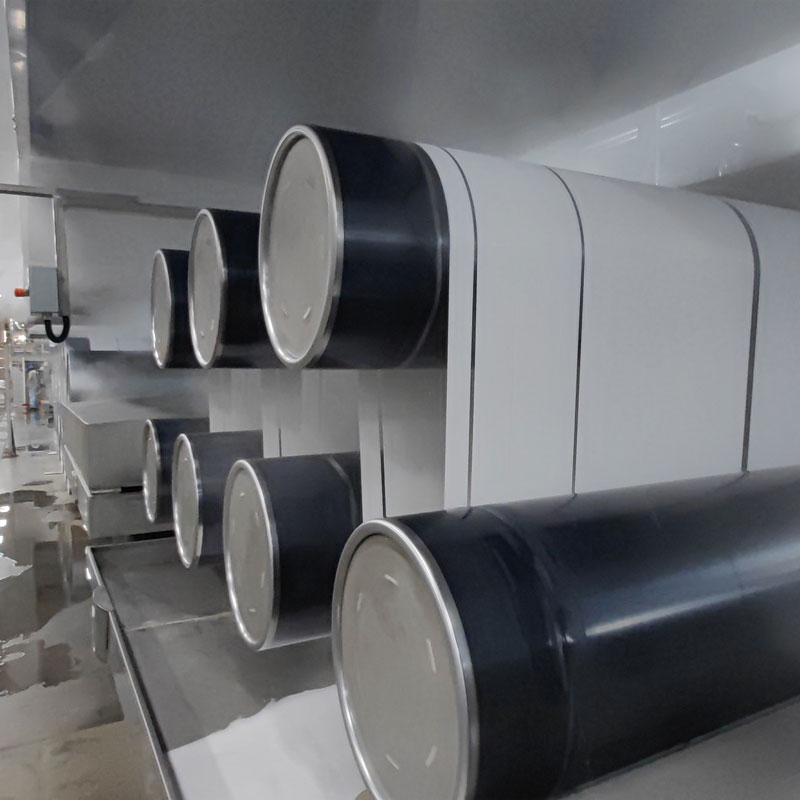 Connected process stages should be assessed as one recycled fiber production system.
Why feedstock preparation determines production stability
Many recycling technology discussions focus on the conversion step because it is visually central to the line. In day-to-day operation, however, unstable input can create the more persistent problem. Variable feed can increase cleaning load, interrupt material flow, complicate blending, and make quality changes harder to diagnose. A practical recycled fiber plan therefore documents the expected input range before equipment capacity is finalized.
For recycled polyester context, Textile Exchange reports that approximately 99% of recycled polyester used by the textile industry comes from mechanically recycled PET bottles. That figure should not be treated as a rule for every recycled fiber stream. It does, however, explain why many projects examine bottle preparation, separation, washing, drying, and stable feeding so closely. The applicable equipment sequence must still be verified against the site’s real material source and finished-fiber requirement.
Build quality control into sustainable production equipment
Green manufacturing is more credible when quality control is planned as part of the process rather than added at the end. Establish checkpoints for incoming material, prepared feedstock, in-process conditions, and finished fiber. The specific tests belong to the product and customer requirements, but the decision logic is consistent: define what is measured, when it is measured, what variation is acceptable, and who can release or hold a lot.
Traceability deserves the same early attention. Reclaimed-material programs may require documentation and verification beyond an equipment purchase. Guidance associated with the Global Recycled Standard addresses verification of reclaimed materials through approved standards or equivalent verification. A line should therefore make it practical to preserve lot identity, record blend decisions, and retain the evidence a customer or auditor may request. This is a planning requirement, not a claim that equipment alone provides certification.
A practical evaluation sequence for recycling technology
- Map the material: List sources, expected composition, contamination risks, moisture condition, lot variation, and annual availability.
- Define the fiber outcome: Set application-specific quality targets and decide which variations are critical to production or customer acceptance.
- Review interfaces, not only capacities: Confirm that transfer, storage, feeding, cleaning, and conversion stages can work together at the expected operating range.
- Plan trials: Use representative material to evaluate process behavior, not only nominal equipment ratings. A pilot or staged validation plan can expose constraints before full-scale commitment.
- Specify evidence: Agree on records for material receipt, blending, process checks, finished-lot testing, and corrective action.
At first this can look slower than selecting a single high-capacity unit. In practice, it can reduce uncertainty because it makes the assumptions behind recycled fiber machinery visible and testable. For industrial teams, that is often the difference between a promising recycling technology concept and an operable sustainable production equipment project.
Questions to bring to an equipment-planning discussion
A productive technical conversation begins with evidence rather than a universal recommendation. Ask which recycled fiber feedstock has been sampled, how contamination will be characterized, which product properties drive acceptance, what throughput range is required, and which records must follow each lot. Also ask how cleaning, blending, and conversion steps will be validated together.
For projects that need broader coordination, whole-project planning can be discussed as a scoped engineering activity: clarify the production objective, map process interfaces, identify test points, and define the information needed for a responsible equipment decision. The preferred configuration depends on the material, target product, site constraints, and validation results. By keeping those conditions explicit, recycled fiber production equipment can support green manufacturing with a process that is both practical and easier to improve over time.


 Hot News